
Containment built for the affected area
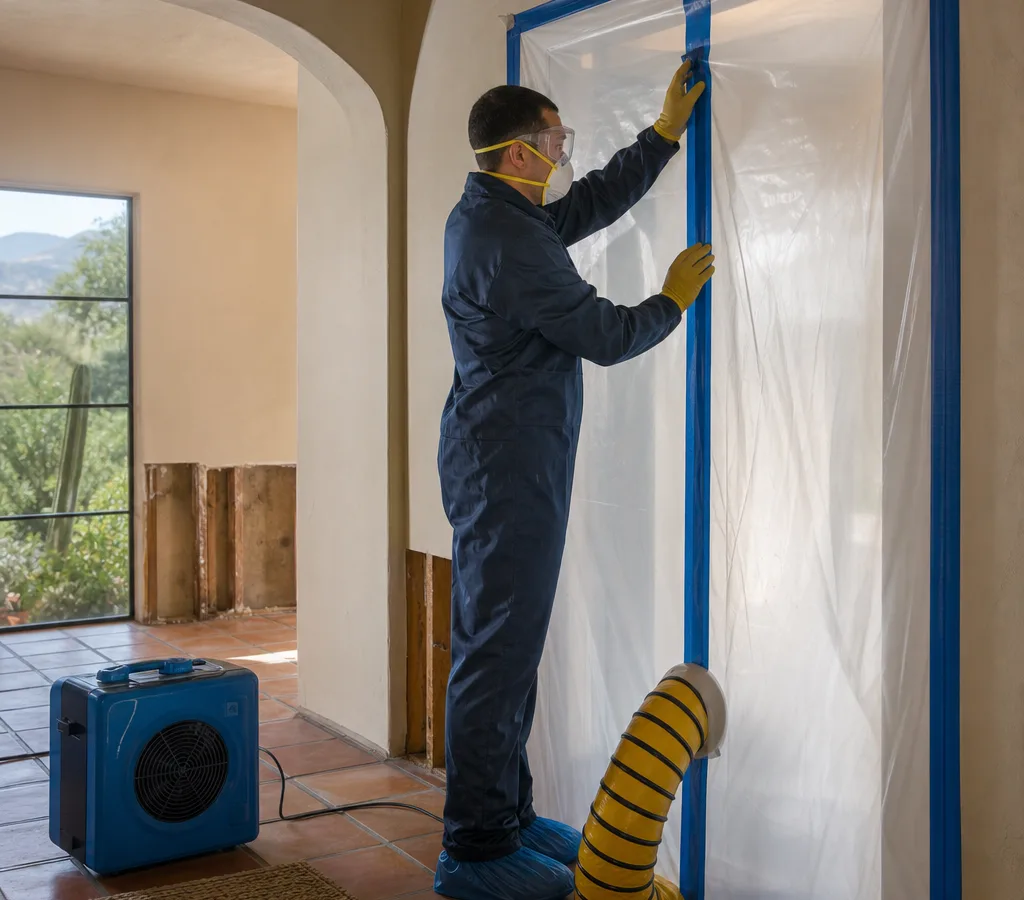
We size containment to the work zone, protect adjacent rooms, and control pathways so spores and dust do not migrate through foot traffic or return air.
Serving Tucson, Arizona & surrounding areas
24/7 Emergency Response
One call instead of ten No web forms, no callback spam 24/7 Emergency Response
Get a clear plan for safe containment, removal, and remediation when dark growth, musty odors, or recent water damage affect your property.
Black mold removal in Tucson is different from wiping a spot on drywall. Mold spreads by spores, and disturbing it without containment can drive contamination into adjacent rooms and the HVAC system.
Tucson Mold Removal handles residential and commercial projects with the same priorities: stop the moisture source, isolate the work area, remove contaminated materials correctly, and clean remaining surfaces so the space can be safely used again.
Common reasons homeowners and property managers call include:
Many projects begin with mold removal guidance and move into targeted remediation once the affected areas are confirmed.
A proper remediation plan is built around two non-negotiables: containment and moisture control. Without those, even an aggressive cleaning job can turn into repeat growth.
In Tucson, HVAC-driven condensation and intermittent leaks can create persistent wet spots that are easy to miss. The cause and drying plan receive the same attention as visible growth because that is what helps prevent recurrence.
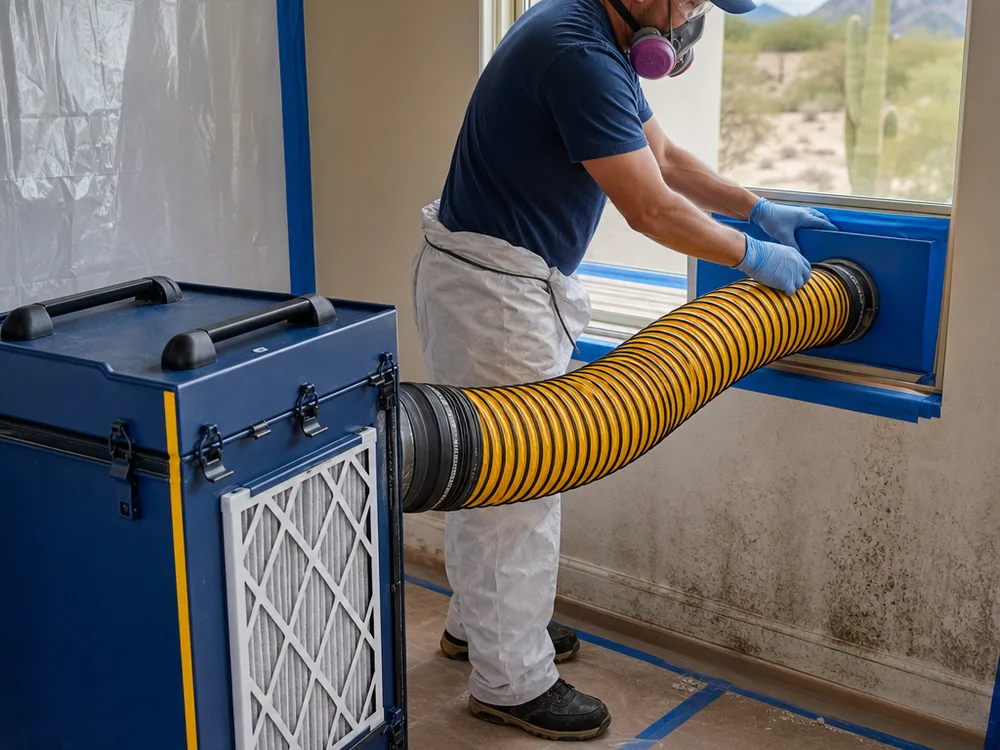
We size containment to the work zone, protect adjacent rooms, and control pathways so spores and dust do not migrate through foot traffic or return air.
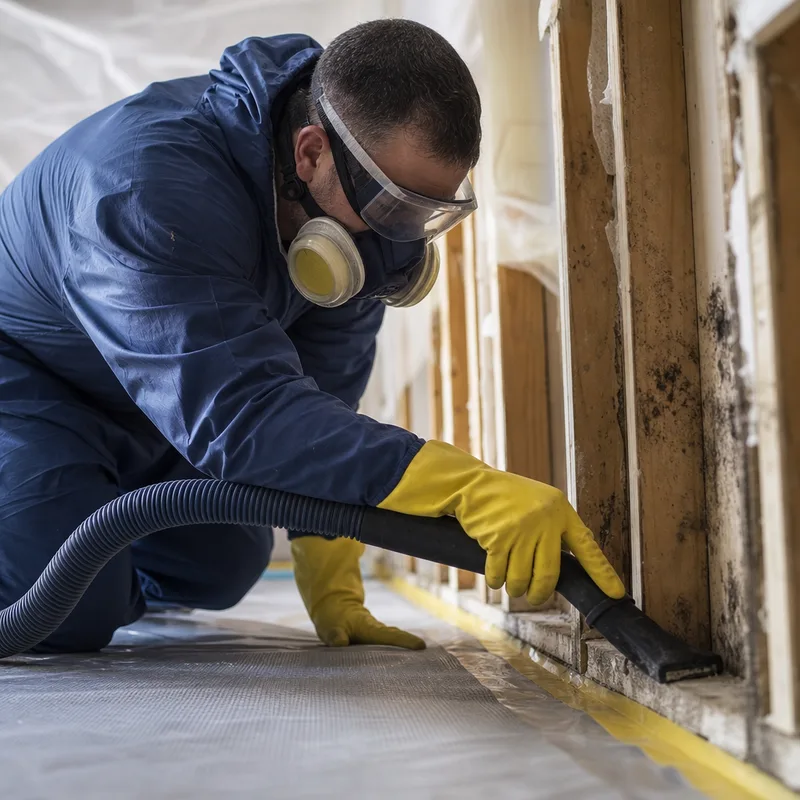
HEPA vacuuming and filtration are standard because shop vacs and basic filters can redistribute spores into the breathing zone.
Porous materials that are saturated or deeply colonized usually need removal, while some framing and masonry can be remediated with the correct steps.
Remediation is incomplete until the leak, condensation, or drainage issue is identified and corrected or there is a clear plan to correct it.
You receive a straightforward scope and next steps for coordinating repairs and, when needed, providing records for property managers or transactions.
A controlled sequence takes the property from moisture investigation through containment, removal, detailed cleaning, and preparation for rebuild.
We look for the reason the area stayed wet, then map likely spread based on the building layout, airflow patterns, and materials. If a wall cavity is suspect, inspection options are discussed before anything is opened.
Work zones are isolated with plastic barriers and controlled entry. Negative air is used when appropriate, and registers may be protected to reduce cross-contamination risk.
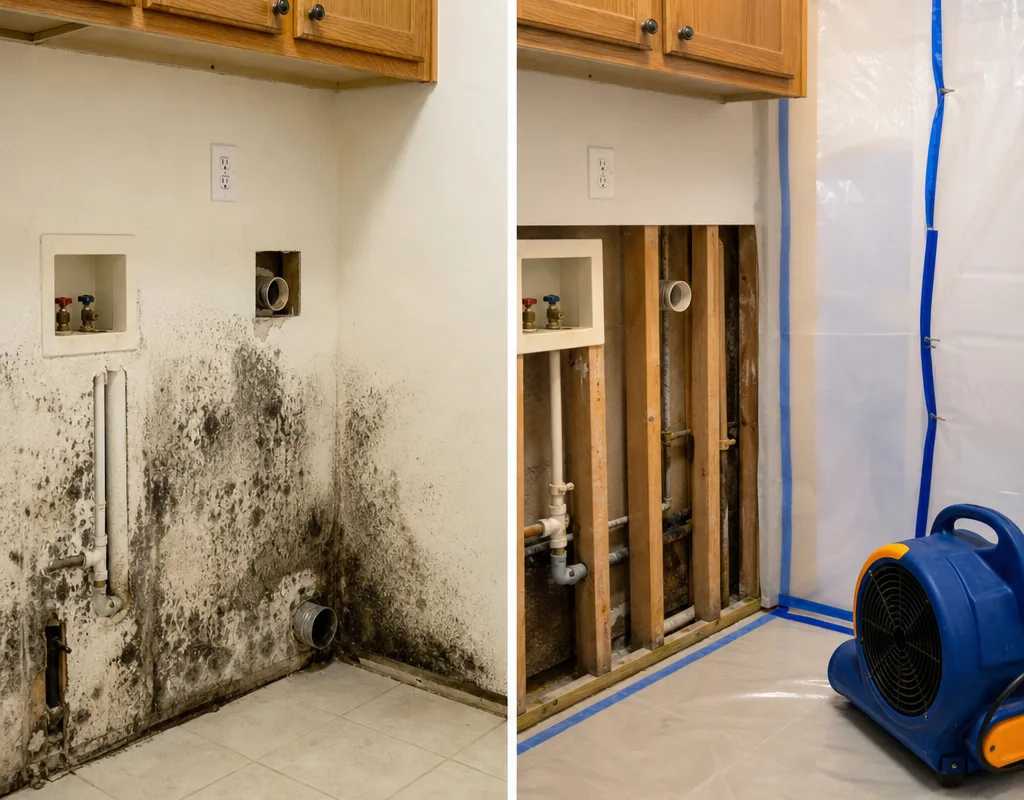
Materials that cannot be reliably cleaned are removed. Remaining framing or hard surfaces are remediated with HEPA vacuuming, damp wiping, and methods suited to the substrate.
Drying and final cleaning happen before rebuilding. We walk through the area, explain what was done, and outline repair priorities so new finishes are not installed over unresolved moisture.
Black mold removal in Tucson typically ranges from about $900 to $6,000+, depending on how much material is affected and whether containment and demolition are required. A small, accessible area such as beneath a sink may fall near the low end, while multi-room spread, HVAC involvement, or removal of drywall and insulation pushes costs higher.
Price is driven by the contaminated area's size, access conditions such as attics or areas behind cabinets, the amount of material that must be removed and bagged, drying needs, and clearance expectations. Exact cost is confirmed after an on-site assessment and written scope of work.
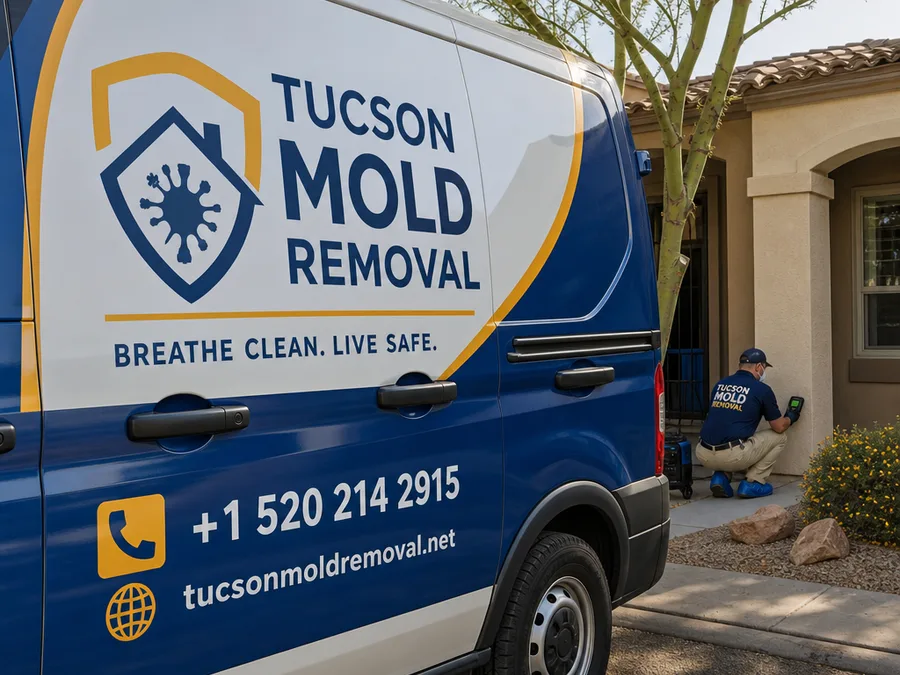
If you are seeing staining or smelling mustiness, get an on-site assessment and a written remediation plan before you start tearing into walls or running fans.
Call for a Free EstimateStraight answers about project timing, drywall removal, staying in the property, cleaning methods, and preparing for remediation.
Most black mold removal projects take 1 to 3 days for containment, removal, cleaning, and initial drying, but larger or hidden spread can take longer. The main schedule drivers are how much drywall or insulation must be removed, whether drying equipment needs extra time, and how quickly the moisture source can be corrected.
Sometimes, but only when contamination is limited to the surface and the drywall has not been saturated or colonized through the paper facing. If the material is soft, swollen, or shows growth on the back, removal is usually safer because drywall is porous and can hold mold below the surface.
Often it is, provided the affected area is fully contained and you can avoid the work zone. If contamination is widespread, involves bedrooms, or you have respiratory concerns, temporarily relocating from the immediate area may be recommended until removal and cleaning are complete.
Bleach can lighten staining on some non-porous surfaces, but it is not a complete remediation method for porous building materials such as drywall, wood, or grout. Proper remediation focuses on containment, removal of unsalvageable materials, HEPA cleaning, and correcting the moisture source.
We can coordinate remediation to support clearance criteria, and many clients use an independent third party for post-remediation verification. For real estate transactions or commercial spaces, independent clearance testing can help document that the work area meets agreed conditions.
Avoid scrubbing or dry-brushing the area, and do not run fans directly on visible growth because that can move spores. If it is safe, stop the water source or shut off the leaking fixture, keep children and pets away, and note where odors are strongest so those rooms can be prioritized.
Tell us what you are seeing and where it is showing up. Tucson Mold Removal will provide a clear scope, safe containment approach, and remediation plan before any work starts.