
Clear findings, written out
You'll receive a straightforward summary of what was observed, where moisture was detected, and what areas are most likely driving the problem.
Serving Tucson, Arizona & surrounding areas
24/7 Emergency Response
Get clear findings, photo documentation, and practical next steps for your home. If you smell a musty odor, see staining, or have unexplained allergy-like symptoms indoors, a detailed inspection can separate suspicion from a confirmed source.
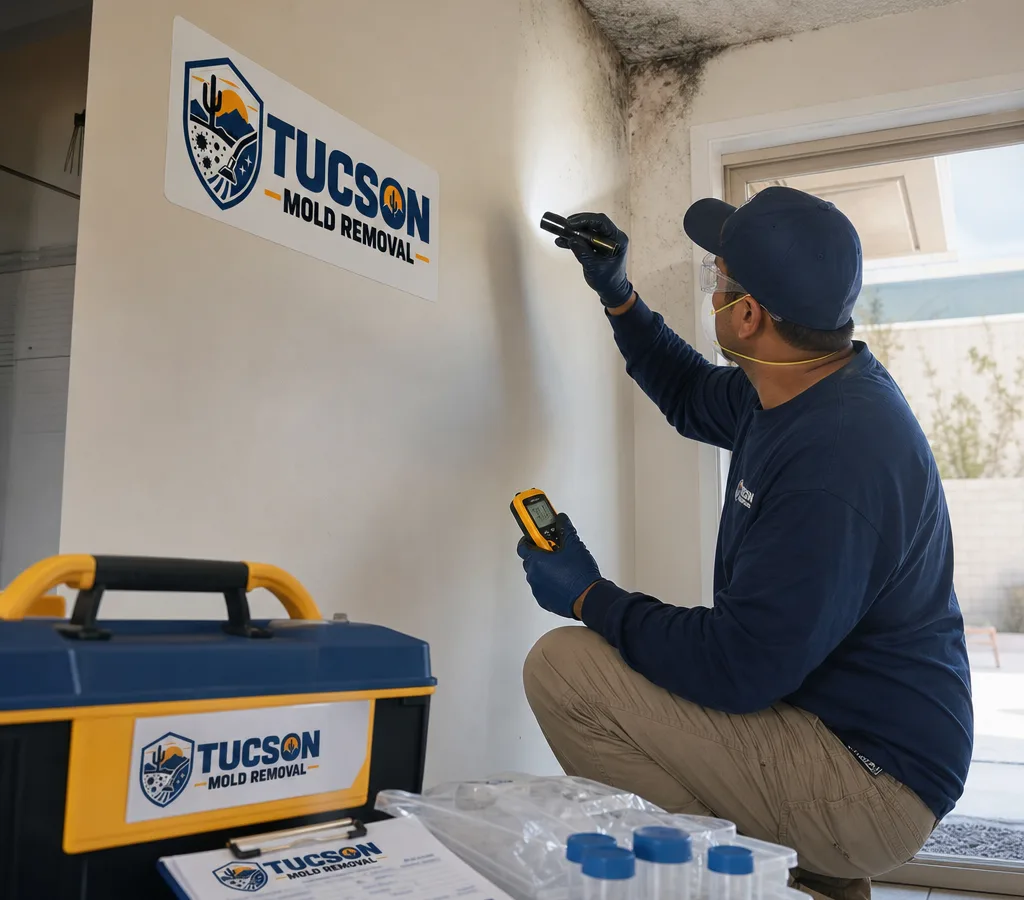
A professional mold inspection in Tucson focuses on identifying where moisture is present, where mold is likely growing, and what conditions are feeding it. Mold needs moisture. In Southern Arizona, that moisture often comes from small plumbing leaks, roof penetrations, HVAC condensation, swamp cooler use, and monsoon-driven water intrusion around windows, stucco cracks, or poorly sealed penetrations.
A thorough inspection typically includes:
An inspection cannot prove a building will remain mold-free forever. Mold spores are normal in outdoor air, and indoor conditions can change quickly after a new leak or humidity issue. The goal is to find active problems, hidden moisture, and likely reservoirs so you can address the cause instead of treating only the surface.
When comparing providers, look for an inspector who explains what they checked, why they sampled—or did not—and what a reasonable next step is based on the findings.
Tucson Mold Removal treats mold inspection as a building investigation, not a quick walkthrough. We start by asking what changed: a recent leak, a roof repair, new staining, an odor after rain, or health symptoms that show up in one room.
Then we work in a tight sequence:
Local housing patterns matter. Older homes in parts of Midtown and Sam Hughes can have aging plumbing and past repairs where small leaks linger in wall cavities. Foothills homes may have complex rooflines and multiple penetrations that need careful checking after seasonal storms. Newer builds can still develop problems around window flashing, HVAC condensate management, and high-use bathrooms.
The result should be a practical path forward: what needs to be dried, what materials are likely affected, and what scope makes sense before anyone starts opening walls.
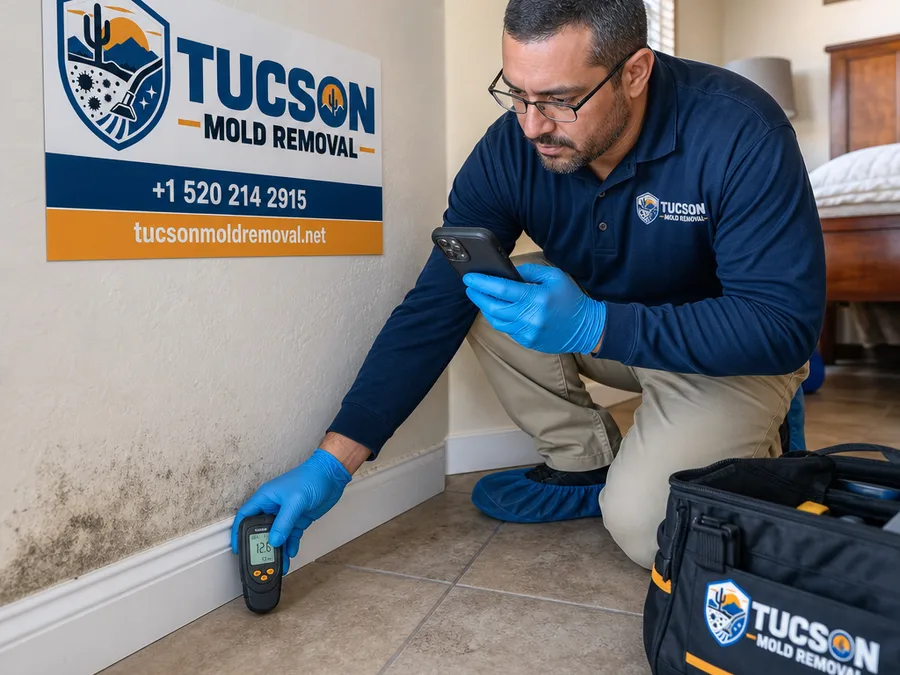
You'll receive a straightforward summary of what was observed, where moisture was detected, and what areas are most likely driving the problem.
We document visible growth, staining, and building conditions so you can coordinate repairs with a plumber, roofer, or HVAC contractor without repeating the same discovery work.
When sampling is appropriate, we use it to confirm what a substance is or to help gauge indoor-air impact, not as a default add-on.
Mold keeps returning when moisture is ignored. We focus on likely intrusion points and condensation patterns so the next step addresses the cause.
You'll know whether the situation looks like a small, contained issue, a hidden cavity concern, or a broader moisture problem that needs a staged plan.
A focused inspection moves from your initial concern to moisture checks, purposeful sampling, and a clear next-step plan.
We start with what you're noticing and what you need the inspection to answer, such as verifying suspected mold, finding a hidden source, or documenting conditions before repairs.
We inspect the problem room and spaces that share plumbing, exterior walls, or airflow pathways. Many issues show up next door to where the odor is strongest.
We use moisture meters and focused checks around likely problem zones such as bathrooms, kitchens, laundry areas, windows, and HVAC components.
If sampling is warranted, we select locations that clarify the situation. If it will not change the plan, we'll say so and keep the inspection focused.
You get a clear explanation of what we found and what to do next, including practical containment considerations if disturbed materials are likely to release particles.
Most mold inspection appointments in Tucson typically range from about $250 to $650, depending on the home's size, how many areas need to be checked, and whether sampling is included. A straightforward single-area inspection is often on the lower end, while larger homes or situations with multiple suspect rooms and additional documentation are usually higher.
Final price depends on access, including tight crawl spaces or high ceilings, how much moisture mapping is needed, how many samples are appropriate, and whether a history of leaks requires broader investigation. Exact cost is confirmed at the inspection based on conditions on site.
“We had a musty smell that got worse after storms. The inspector found moisture along a window wall we never would have suspected, explained what readings meant, and gave us a clear list of what to fix first.”
“I appreciated that they didn't push unnecessary samples. The report was easy to follow and helped our contractor target the right area instead of opening multiple walls.”
Straight answers about when to inspect, when sampling helps, appointment timing, and what happens after findings are documented.
Schedule an inspection when you have a persistent musty odor, visible staining, recurring allergy-like symptoms indoors, or a recent water event such as a roof leak or plumbing issue. In Tucson, it is also smart to inspect after heavy seasonal rains if new discoloration appears near windows, ceilings, or exterior walls.
Testing is useful when the result will change what you do next, such as confirming whether a substance is mold or checking whether a closed room is affecting indoor air. If growth is clearly visible and the moisture source is known, sampling may not add value; the priority becomes fixing moisture and planning the correct work scope.
Most inspections take about 60 to 120 minutes, depending on the home's size and how many areas are involved. Multiple suspect rooms, attic access, or detailed moisture mapping can require more time.
Leave the suspect area as-is and avoid scrubbing or spraying bleach, which can remove evidence while leaving the moisture problem untouched. If possible, note when the odor or symptoms are strongest and whether they change with HVAC use, rain, or showering.
Yes. We can inspect visible components and surrounding building materials for moisture and growth and discuss conditions that commonly drive issues, such as condensate drainage problems or high indoor humidity. If conditions suggest a mechanical repair is needed, we will recommend the appropriate trade for correction.
A good inspection identifies the moisture source and likely mold reservoir and clarifies the next logical steps, which may include opening a cavity in a targeted location, fixing a leak, or drying materials. Exact repair scope can depend on what is found after access is created, but the inspection keeps that work controlled and purposeful.
Tell us what you're seeing and where it's happening. We'll schedule a detailed mold inspection and walk you through the findings so you can make the next decision with confidence.