A plan built around your concern
We start with questions about leaks, past flooding, HVAC performance, and where odors or symptoms show up, then focus the inspection and sampling on the most likely areas.
Serving Tucson, Arizona & surrounding areas
24/7 Emergency Response
Get clear, documented results for homes and businesses, with sampling when it makes sense, lab analysis, and a written report you can use to decide what to do next.
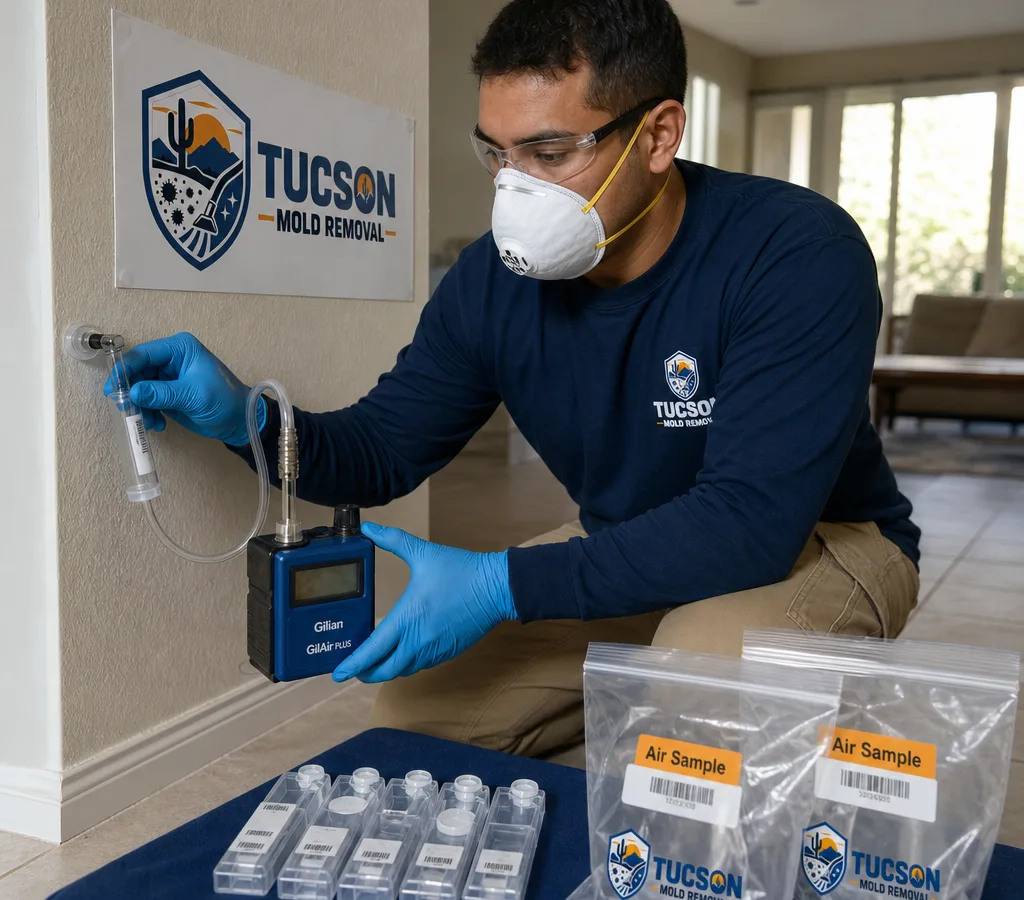
You usually do not need a test to confirm obvious, widespread visible growth. You test when you need evidence and clarity: a musty odor with no visible source, symptoms that improve away from the building, water damage history, real estate due diligence, or a cleanup plan that needs a baseline and a post-work check.
Tucson's heat and seasonal monsoon moisture can create short, intense wetting events. When drywall, insulation, or the back side of cabinets stays damp, growth can develop out of sight even if surfaces look fine. Tucson mold testing helps answer two practical questions: where the moisture impact is, and whether mold conditions inside the building are different from outside.
If you are comparing providers, Tucson Mold Removal handles inspections and testing with a trades-first approach: locate likely sources, document what we see, and recommend next steps that match the situation instead of defaulting to the same sampling package every time.
We start with questions about leaks, past flooding, HVAC performance, and where odors or symptoms show up, then focus the inspection and sampling on the most likely areas.
Air samples, surface swabs/tape lifts, or a small wall cavity check are chosen based on the question you are trying to answer, not because a bundle includes them.
Collected samples are documented and sent for analysis so you have third-party results to support decisions, negotiations, or a cleanup scope.
You receive findings, photos where helpful, sampling locations, and practical recommendations for next steps, including when to involve a remediation contractor.
Testing is a snapshot in time. We explain what results can and cannot prove so you do not overreact to a number that is not tied to building conditions.
A good test starts with a good inspection. We look for water entry points and humidity drivers first because mold follows moisture. In Tucson that often means checking around bathrooms, laundry areas, under sinks, near exterior doors and windows, and anywhere a roof leak or plumbing issue may have occurred. We also look for building materials that hold moisture (paper-faced drywall, insulation, particleboard cabinetry) and for air movement issues that can spread spores.
Common testing methods we may use
We will also talk through whether testing is the right next step at all. If the real need is to stop a leak, dry materials, or correct ventilation, we will tell you that plainly so you are not paying for data that does not change the decision.
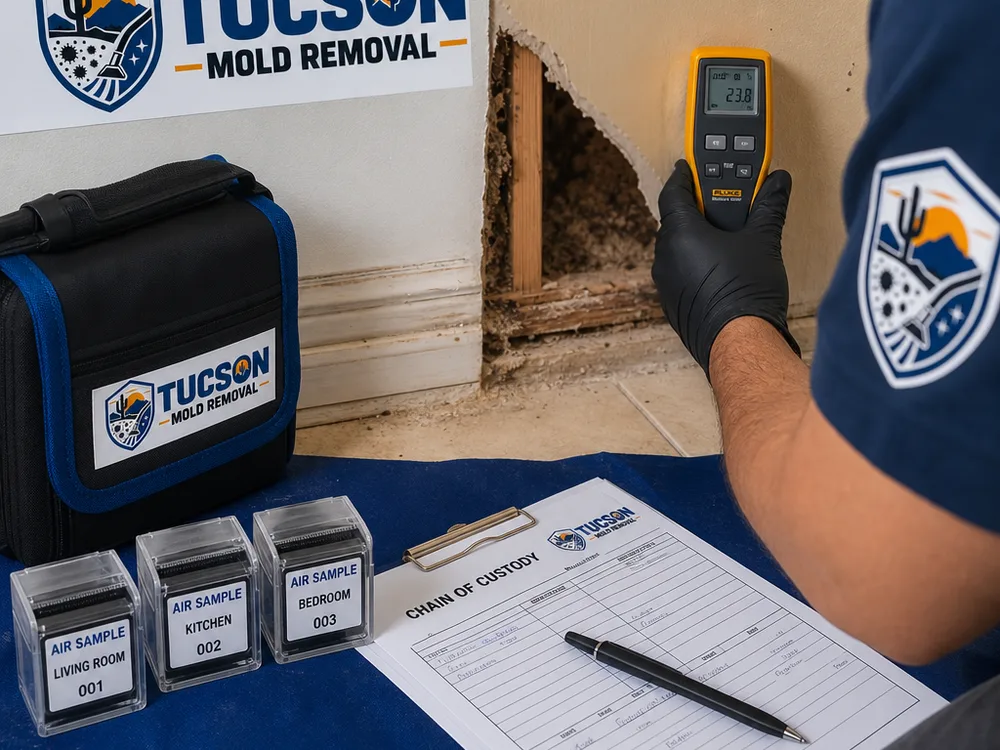
A focused sequence connects your initial concern to documented findings and practical next steps.
We listen to what prompted the request, identify the most relevant rooms, and note any water events, repairs, or ongoing moisture concerns.
We look for visible growth, staining, condensation patterns, and elevated moisture in building materials to guide where sampling will be meaningful.
We collect the right sample type for the goal: confirming a suspect spot, evaluating indoor air, or documenting a hidden source with a targeted approach.
Samples are packaged and documented for lab analysis. Turnaround times vary by lab and workload, and we will set expectations before we leave.
We explain the findings in plain language and provide documented recommendations that support a cleanup scope, repairs, or further investigation if needed.
Tucson mold testing typically ranges from about $250 to $750 for most residential situations, depending on how many samples are collected and what type they are. A limited, single-issue visit with one sample may fall near the low end, while a larger home or a situation needing multiple indoor air samples plus a surface sample can be higher.
Final pricing mainly depends on sample count, whether an outdoor control sample is included, how complex access is (attics, tight crawlspaces, high ceilings), and whether you need expedited lab turnaround. The exact cost is confirmed after the on-site inspection and a sampling plan that matches your goal.
If you are deciding whether to test, or what kind of sampling would actually answer your question, tell us what you are seeing and we will recommend a sensible next step.
Call for a Free EstimateStraight answers about timing, sampling methods, interpreting results, and preparing for your appointment.
Scheduling depends on current demand, but many inspections can be arranged quickly, and lab results follow the lab's turnaround time. If timing matters for a real estate contingency or a clearance decision, mention your deadline so we can plan sampling and reporting around it.
If growth is obvious and widespread, testing often is not necessary to justify cleanup; the priority is fixing the moisture problem and removing affected materials properly. Testing is most useful when you need to document what it is, determine whether the air is impacted, or confirm whether a hidden source is likely.
Air sampling checks what is suspended in the air at the time of sampling and is often used to compare indoor conditions to an outdoor control sample. A swab or tape lift identifies what is on a specific surface, which helps when you have a visible spot and need documentation of what it is.
Testing can support the investigation, but the source is identified through inspection and moisture diagnostics. Elevated results without moisture context can be misleading, so we tie sampling locations to building conditions such as damp materials, prior leaks, condensation, or ventilation issues.
Yes, post-work testing can be performed to help confirm that conditions have improved after cleanup and drying. The most useful approach usually includes a visual check of the work area, moisture verification on affected materials, and targeted sampling that matches what was done.
Most occupants can stay during a standard inspection and sampling appointment. If you have severe sensitivities, discuss that with us ahead of time so we can plan the visit, keep disturbance low, and focus on efficient sampling and documentation.
Provide access to the areas of concern, clear light clutter from around suspected locations (under sinks, closets, near HVAC returns), and share any history of leaks or repairs. Avoid heavy cleaning, spraying strong chemicals, or running air purifiers right before the appointment if the goal is to understand normal conditions.
Yes, we perform mold testing for homes and for many types of commercial spaces where indoor air quality and documentation matter. For tenant-occupied spaces, it helps to outline the specific complaint areas and any recent water events so the sampling plan stays focused.
Describe what you are noticing and where it is happening. Tucson Mold Removal will confirm whether testing is warranted, recommend the right sampling approach, and provide documented findings you can use to make cleanup and repair decisions.