Mold remediation · Tucson, Arizona

Mold Remediation Tucson

Contain the area quickly and remove contaminated materials safely. We return the space to clean, dry conditions and clearly document what was done.

Trained technicians Professional containment Clear documentation
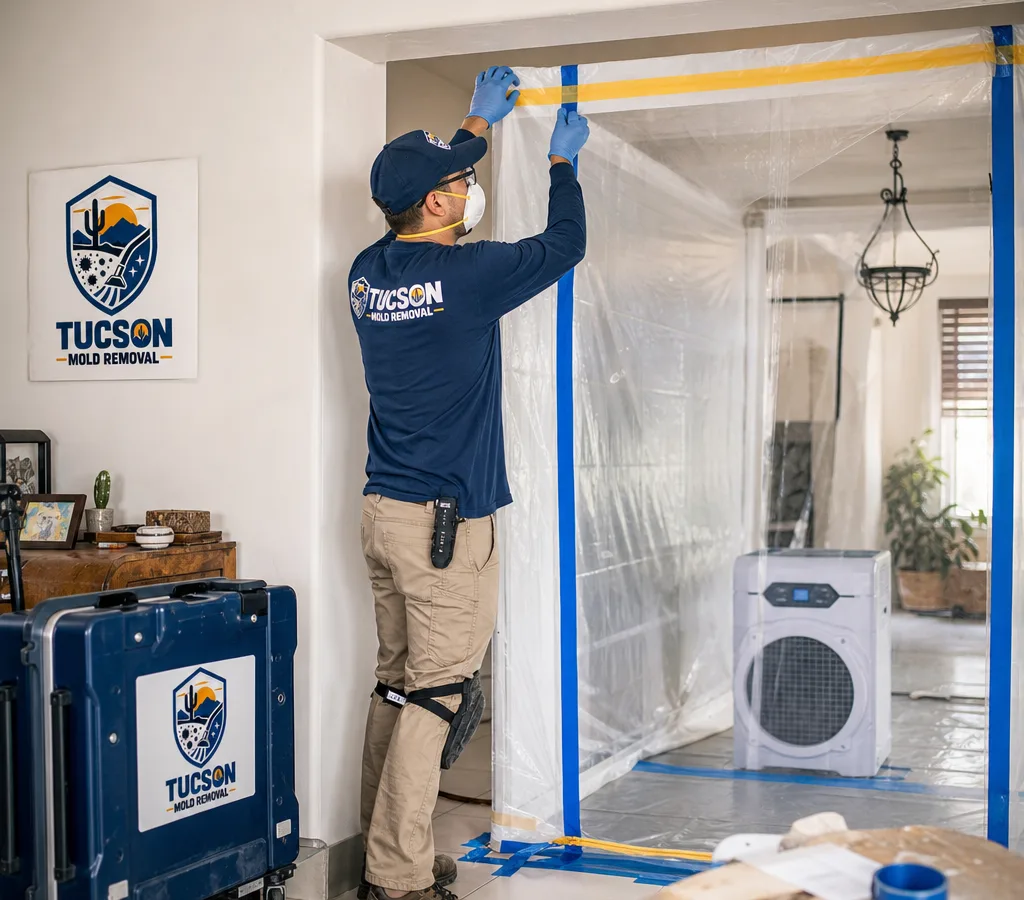
Technician sealing a containment doorway with a HEPA air scrubber inside a Tucson home

What mold remediation includes (and why it matters in Tucson homes)

Mold remediation in Tucson is usually less about constant humidity and more about isolated moisture events: a supply line leak, an A/C drain backup, a roof penetration after a monsoon storm, or a slow plumbing drip inside a wall. Mold is the symptom. The job is to control the spread, remove what cannot be cleaned, and dry the structure so it does not come right back.

With Tucson Mold Removal, the work is handled by trained technicians using professional containment and filtration. The goal is practical: protect the rest of the home during demolition and cleanup, and leave you with a space that can be rebuilt without hidden dampness or contaminated dust.

A proper scope typically includes:

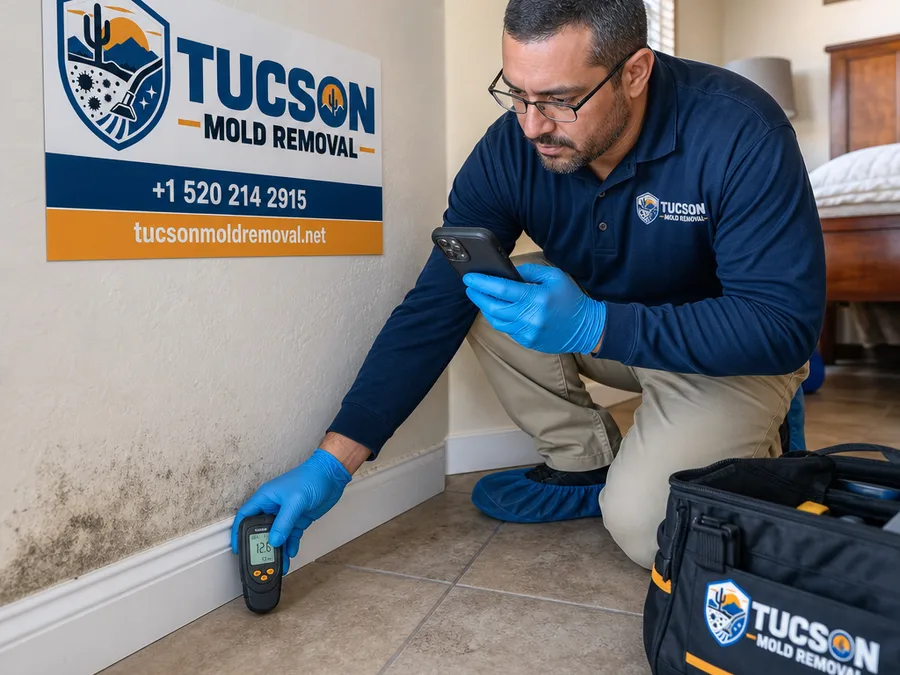
  • A moisture assessment to find the wet materials, not just the visible growth.
  • Containment barriers and negative air when needed to keep spores from migrating.
  • Removal of impacted porous materials such as drywall, insulation, carpet pad, or baseboards when they cannot be effectively cleaned.
  • HEPA vacuuming and damp wiping of remaining framing and surfaces.
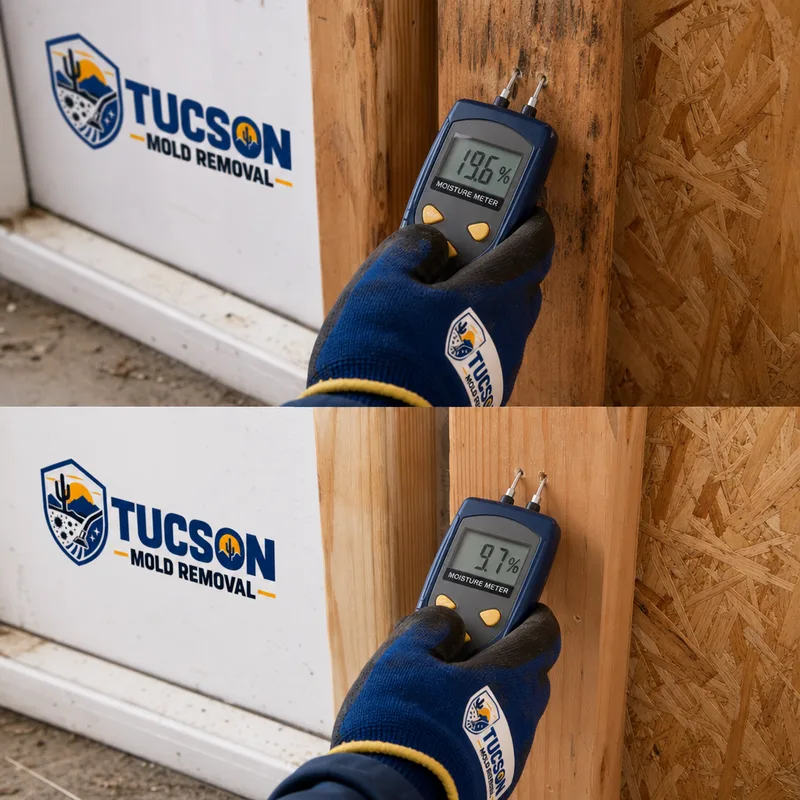
  • Drying and dehumidification until materials reach stable moisture levels.
  • A clear record of contained areas, removed materials, and drying steps.

If you are still in the early stage and want clarity on whether you are dealing with mold, moisture, or both, start with Tucson mold inspectors for a straightforward evaluation and next steps.

Common situations we remediate

Bathroom and laundry moisture

Growth around tub surrounds, behind vanities, and near laundry hookups often traces back to slow leaks or repeated wetting. Remediation focuses on removing affected drywall and backing, then drying framing before repairs.

A/C and HVAC condensation issues

Clogged condensate drains and poorly draining secondary pans can wet ceilings or closets. We contain the area, remove impacted materials, and dry thoroughly so the condition does not linger behind finishes.

Kitchen sink and dishwasher leaks

Cabinets and toe-kicks can trap moisture for weeks. We open the area to verify what is wet, remove swollen or contaminated materials, and clean remaining surfaces with HEPA methods.

Roof and window intrusions after storms

After heavy rain, water can travel and show up far from the entry point. We track moisture patterns, address affected cavities, and dry the structure so you can complete repairs confidently.

Crawl spaces and subfloor problems

When moisture collects under flooring, odors and staining can develop indoors. Remediation may include removing impacted insulation, cleaning wood members, and improving drying conditions in the void.

Book Your Free Inspection

How we keep the rest of your home protected during remediation

The biggest difference between basic cleanup and professional mold remediation is controlled work practices. Disturbing contaminated drywall or insulation without containment can spread fine debris into adjacent rooms and HVAC returns.

For Tucson projects, we typically use a combination of:

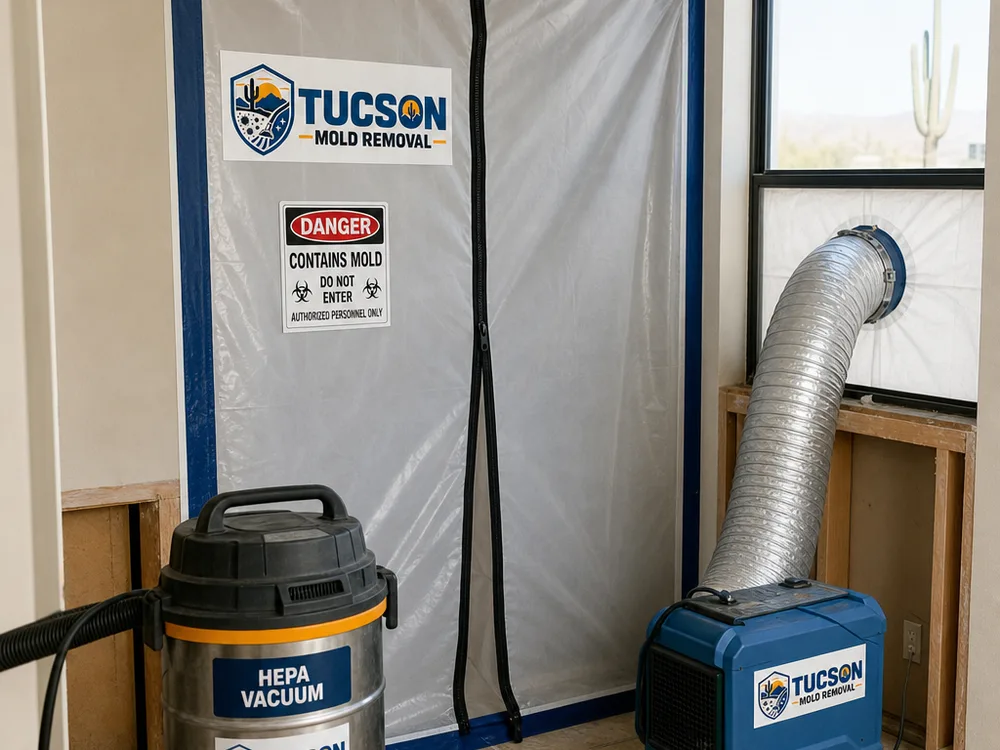
  • Containment: Poly sheeting barriers with zipper doors isolate the work area.
  • Negative air: An air scrubber pulls air from the contained area to help keep particles from escaping.
  • HEPA filtration: HEPA vacuums and air scrubbers capture fine particulate.
  • Controlled removal: Porous materials are cut back to clean boundaries, bagged, and removed along a planned path.

This approach is especially helpful in occupied homes, homes with kids or sensitive occupants, and tight interior layouts where dust would otherwise travel. Near the University of Arizona and in denser housing pockets where rooms share common walls and shorter hallways, containment and airflow control help keep unaffected areas livable while work is underway.

Book Your Free Inspection
Sealed containment entry with negative air equipment and a staged HEPA vacuum

Our mold remediation process

A controlled sequence protects adjacent rooms, removes affected materials, and verifies that the structure is ready for repair.

01

Assessment and scope

We inspect affected areas, check for moisture, and define what needs to be opened, removed, and dried. Photos from a leak or prior repair notes help set a clean scope.

02

Containment and filtration setup

We isolate the work zone with barriers and set filtration as appropriate for the location and level of disturbance. Protecting adjacent rooms is part of the plan.

03

Controlled removal of impacted materials

Porous materials that cannot be cleaned are removed back to sound, dry boundaries. Contents are protected in place or temporarily moved depending on conditions.

04

Cleaning of remaining structure

We HEPA vacuum and damp clean framing and surfaces to remove fine debris and residue, creating a visibly clean substrate suitable for rebuild.

05

Drying and verification

We dry the area and monitor progress until moisture readings indicate the structure is stable. If additional wet cavities are found, we adjust the drying plan.

06

Wrap-up and documentation

We leave the space clean with contained materials removed and the work documented before repairs or reconstruction begin.

Book Your Free Inspection

How Much Does Mold Remediation Cost in Tucson?

Mold remediation in Tucson typically ranges from about $1,000 to $6,000 for many residential jobs, with small, contained areas often on the low end and multi-room or hidden moisture problems running higher. A limited drywall cut-out and cleanup might be closer to $1,000 to $2,500, while larger containment with significant demolition and drying can be $3,000 to $10,000+.

Final price depends on how far the contamination extends, how much porous material must be removed, access such as attics, tight closets, or areas behind cabinets, and how long drying equipment needs to run. Exact pricing is confirmed after an on-site assessment and a written scope.

Book Your Free Inspection

What remediation work looks like in real homes

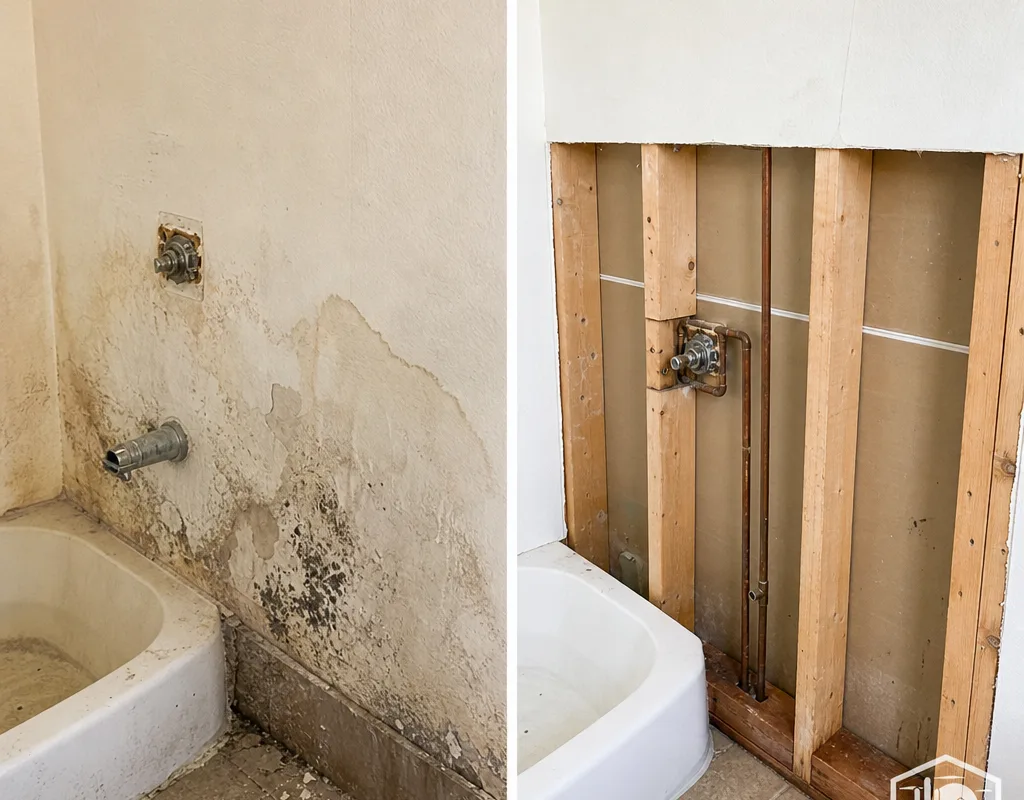
Bathroom wall before remediation and after affected drywall was removed and the cavity cleaned and dried
Technicians handling sealed debris bags with hallway floor protection in place
Moisture meter verifying dry wall framing before the cavity is closed
Book Your Free Inspection

Mold remediation questions Tucson homeowners ask

Straight answers about timing, containment, material removal, odors, and preparing for remediation.

How long does mold remediation take?

Most mold remediation projects take 1 to 3 days of active work, plus additional drying time if materials are still wet when the area is opened. Small, localized jobs may be completed in a day, while multi-room projects or ongoing moisture issues can take longer because drying and verification drive the timeline.

Can you remediate mold without removing drywall?

Sometimes, but only when the affected material is non-porous or growth is strictly surface-level and the substrate is dry. If drywall, insulation, or carpet pad is impacted, removal is usually appropriate because porous materials hold contamination and moisture. Inspection and moisture checks guide that decision.

Do I need to leave my house during remediation?

Often you can stay if the work area can be fully contained and isolated, but it depends on the location, demolition, and occupant sensitivity. If remediation affects a main living area or HVAC airflow, temporary relocation for part of the project may be more comfortable.

What should I do before your team arrives?

Keep the area undisturbed and avoid running fans that could move dust. If safe, stop the water source and save details about when the leak occurred, what was repaired, and where odor or staining first appeared. Clear a path for equipment and keep pets away from the work zone.

Will the musty smell go away after remediation?

In many cases, yes, once contaminated materials are removed and the structure is dried and cleaned. Odor can linger if moisture remains in a hidden cavity, porous contents were affected, or the water source was not corrected. Our process checks for damp materials that can cause odor to return.

Do you handle remediation for rentals or property managers in Tucson?

Yes, we can coordinate access, containment, and documentation in a way that supports tenant communication and repair planning. Quick scoping matters because the affected area is not always where the leak started, especially when water travels through walls or ceilings.

Is bleach enough to treat mold?

Bleach may discolor surface staining, but it does not reliably solve contamination in porous materials or address moisture in a building assembly. Effective remediation relies on containment, removal of impacted porous materials when needed, HEPA cleaning, and drying to verified moisture levels.

Get a clear remediation plan before the problem spreads

Tell us what you are seeing and where it is located, and we will outline the safest next step, whether that is immediate containment, a defined removal scope, or moisture-focused drying to prevent recurrence.