
Containment first
We isolate the work area with plastic sheeting and maintain negative pressure with HEPA-filtered air scrubbers so disturbed spores do not migrate into clean rooms.
Serving Tucson, Arizona & surrounding areas
24/7 Emergency Response
One call instead of ten No web forms, no callback spam 24/7 Emergency Response
When mold shows up after a leak or storm, speed matters. Get a fast on-site assessment, a written scope, and safe removal steps that protect your home and the people in it.
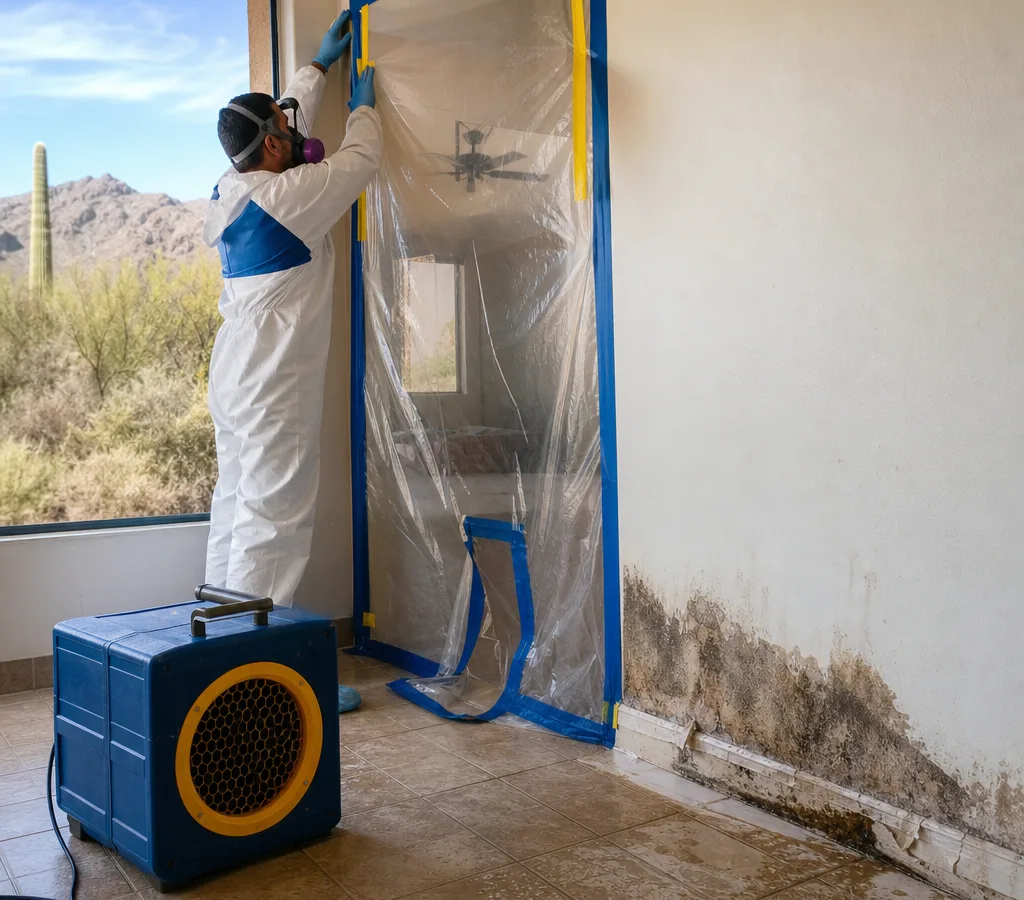
If you searched for emergency mold removal Tucson, you are probably dealing with an active moisture problem: a supply line leak, an overflowing HVAC condensate drain, a roof intrusion during monsoon rains, or a recent flood. Mold can start growing quickly on wet drywall, carpet padding, and framing, so the goal in an emergency is straightforward: stop the moisture, contain the affected area, remove contaminated materials safely, and dry the structure back to normal.
Tucson Mold Removal handles urgent remediation with a practical plan you can understand. We focus on damage control first so the problem does not spread, then on thorough removal and drying, and finally on clear next steps for repairs.
Before hiring, look for a written scope that explains the containment approach, what materials are being removed, how drying will be verified, and what clearance criteria will be used before the space is reoccupied.
Not sure whether you are dealing with mold or something that only looks like it? Start with Tucson mold inspectors for a clear assessment and documentation you can use for insurance or property decisions.
An emergency is not just visible spotting. It is any situation where moisture is ongoing or hidden, or where exposure risk is higher because growth is in living spaces, HVAC pathways, or porous materials.
Common emergency triggers in Tucson include:
While waiting for an assessment:
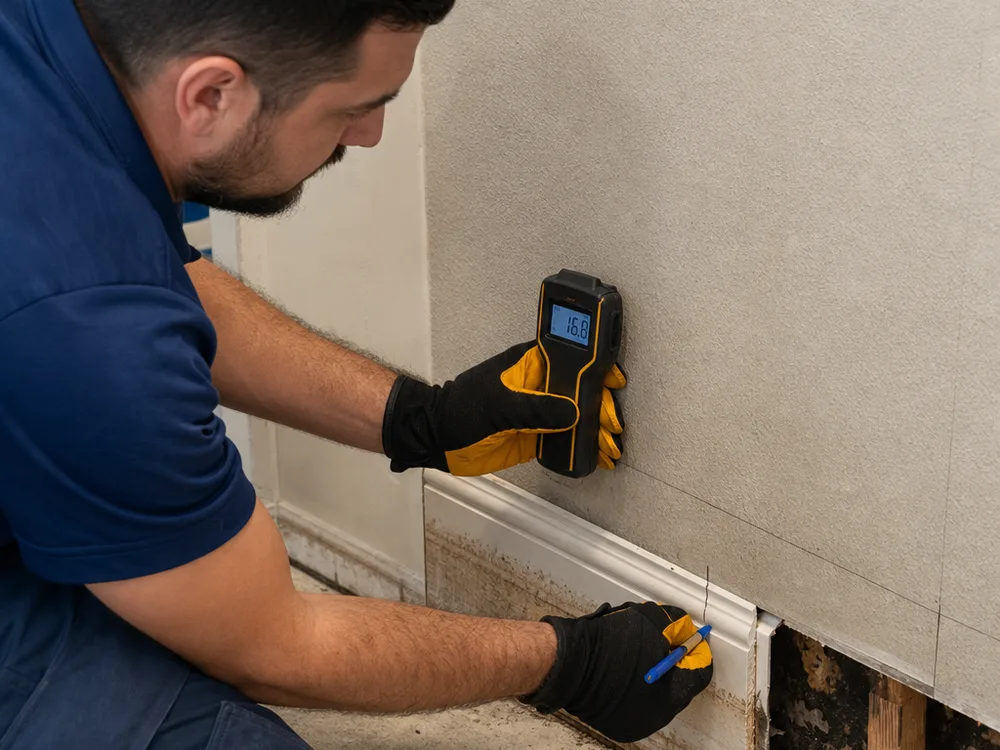
During the first visit, we look for the moisture source, map affected materials, and recommend the right containment level before removal begins.
We isolate the work area with plastic sheeting and maintain negative pressure with HEPA-filtered air scrubbers so disturbed spores do not migrate into clean rooms.
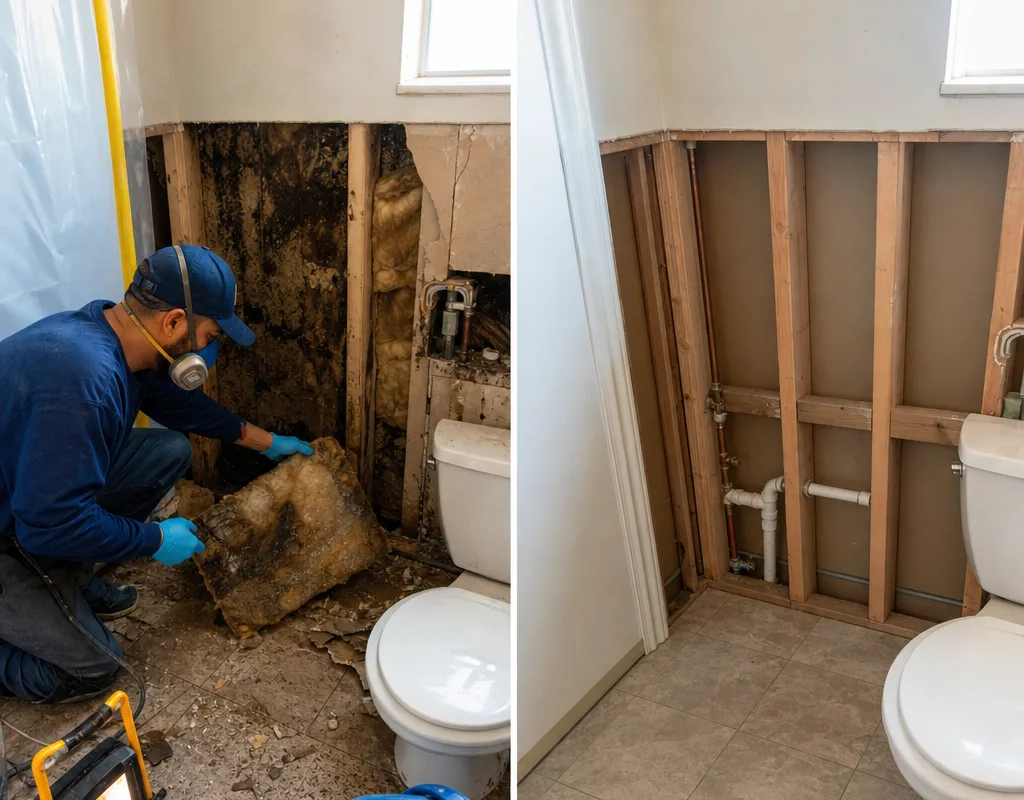
Wet or contaminated drywall, insulation, carpet padding, and other porous materials are removed methodically, bagged, and staged for disposal based on the scope.
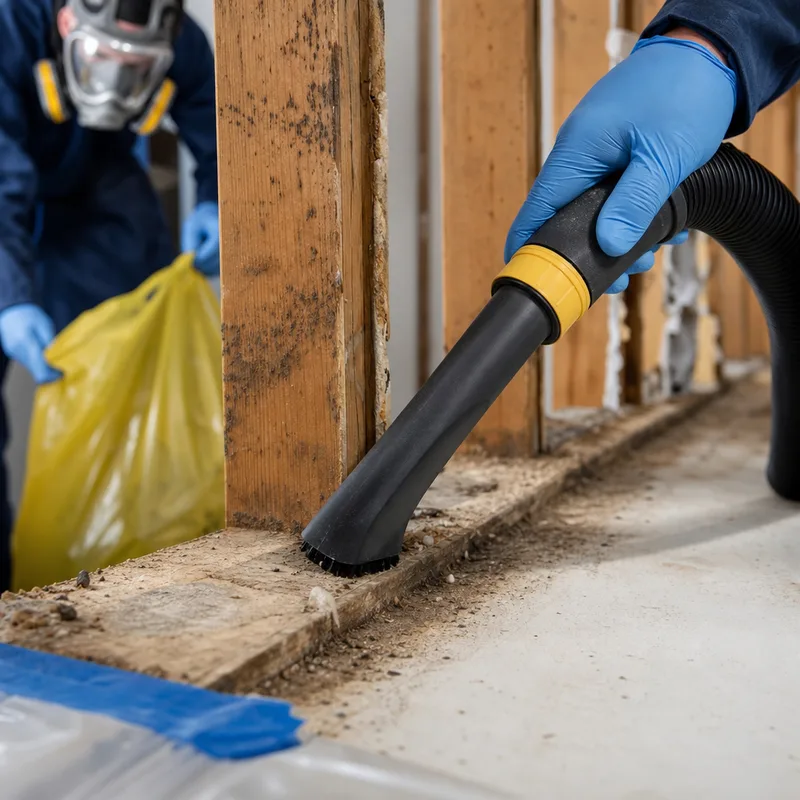
After removal, we HEPA vacuum and wipe remaining structural surfaces. Framing is addressed based on condition, not guesswork.
We use professional dehumidification and air movement as appropriate, then verify dryness with moisture readings so rebuilding is not done over a damp cavity.
You receive a plain-language plan covering what can be rebuilt, what should stay open longer, and what documentation to retain for insurance.
Emergency work often happens while you are still living there. We plan containment and access routes to keep disruption and exposure as low as practical.
A controlled sequence takes the property from active moisture and contamination to documented, verified drying.
We identify the likely water source and check surrounding materials, including adjacent rooms, with moisture tools. If a leak is ongoing, stopping the water comes first.
Based on location and extent, we choose an appropriate containment approach. Air scrubbers are placed to control airborne particulates during removal.
Drywall, insulation, carpet padding, and other porous items that cannot be reliably cleaned are removed to clean, dry boundaries.
We HEPA vacuum and wipe framing and hard surfaces in the work zone, then address staining or growth on wood as needed using appropriate remediation methods.
We dry the structure with dehumidification and air movement and take follow-up moisture readings. The area must be dry enough before rebuilding.
We provide a written scope and job documentation explaining what was removed, what was cleaned, and what conditions were met before closure.
Emergency mold removal in Tucson typically ranges from about $1,200 to $6,000+, with small, contained areas on the low end and multi-room or HVAC-adjacent projects on the high end. A limited wall-cavity removal with containment and drying often lands around $1,200 to $2,800, while larger demolition, heavy drying, and post-remediation verification can push costs higher.
Final price depends on the size of the affected area, how much porous material must be removed, how hard the space is to access, how long drying takes, and whether the source of moisture is still active. Exact cost is confirmed after the on-site assessment and written scope.
Straight answers about scheduling, containment, materials, occupied homes, and insurance documentation.
In most emergency situations, the priority is getting an on-site assessment quickly so containment and drying can start before the problem spreads. Availability depends on current demand and severity, but urgent jobs are scheduled ahead of non-urgent work whenever possible.
Often yes, but it depends on where the mold is and what containment is required. If growth is in a bedroom, main hallway, or near HVAC returns, temporary relocation from that zone or the home may be recommended during demolition and cleaning.
Common emergencies are tied to plumbing and HVAC moisture: under sinks, behind toilets, around water heaters, laundry areas, and near air handler closets or condensate lines. After monsoon storms, roof intrusions can also wet hidden ceiling cavities.
Wet or moldy porous materials are usually removed because drywall, insulation, and carpet padding cannot be reliably restored once contaminated. Sound non-porous and semi-porous materials may be cleaned when contamination is limited.
Spread is controlled with containment barriers, negative air pressure, HEPA filtration, careful bagging, and a planned debris exit route. Demolition without containment can distribute spores into clean spaces.
Bleach may discolor surface staining, but it does not reliably address growth in porous materials or wall cavities, and it does not solve the underlying moisture. Active leaks, cavity odors, or growth on drywall warrant professional assessment.
We can provide photos, moisture readings, and a written scope of work. Coverage depends on your policy and the cause of loss, so it is smart to begin the claim process early once the source is identified.
Tell us what happened, where you see moisture or staining, and whether anyone in the home has sensitivities. Tucson Mold Removal will outline containment, removal, and drying steps so you can make decisions with a written scope, not guesses.