
Room-by-room findings you can act on
We note the suspected moisture source, affected materials such as drywall, wood trim, and insulation, and whether the pattern suggests an ongoing leak, past event, or humidity problem.
Serving Tucson, Arizona & surrounding areas
24/7 Emergency Response
One call instead of ten No web forms, no callback spam 24/7 Emergency Response
Get clear findings before you plan removal or repairs. If you smell musty odors, see staining, or have had a plumbing leak or monsoon water intrusion, a proper inspection tells you what is growing, where the moisture is coming from, and what to do next.
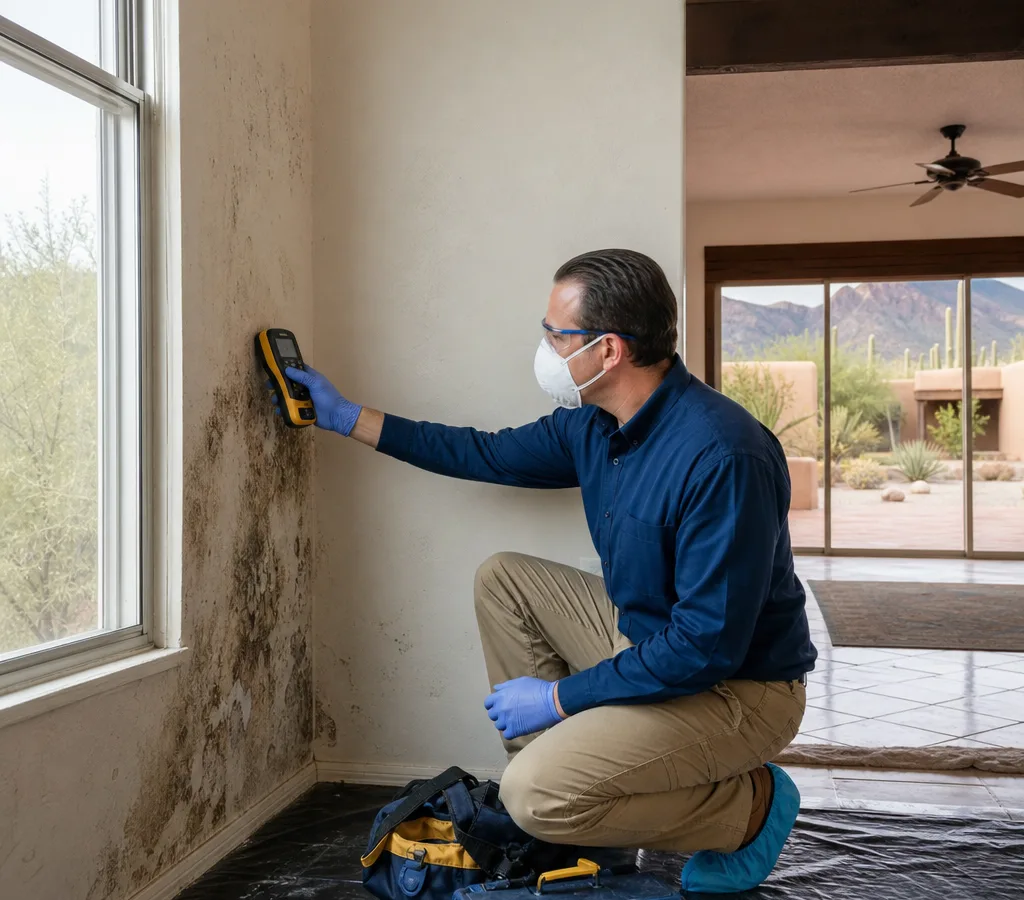
You are usually not hiring an inspection because you want a guess. You want a clear answer: whether mold is present, what conditions are feeding it, and what it takes to fix the problem the right way.
As tucson mold inspection experts, our job is to evaluate the building conditions that support fungal growth and document findings in a way you can use. That includes looking for elevated moisture, tracing likely sources, and collecting samples when sampling will actually change the decision.
In Tucson, mold concerns often follow AC issues such as condensate drains, wet coils, and duct sweating; plumbing leaks inside walls; or water entry around windows, roofs, and stucco after heavy storms. We focus on the building science as much as the visible spots so the next steps are practical, not generic.
Tucson Mold Removal performs inspections for homeowners, landlords, property managers, and buyers who need a defensible report for planning, negotiations, or repair coordination. If you are comparing providers, Tucson Mold Inspectors can help you understand what a complete inspection includes before anyone starts tearing out materials.
A reliable inspection starts with moisture because moisture is the driver. We use non-invasive meters to scan drywall and baseboards, and pin meters where needed to confirm the actual moisture content of building materials.
From there, we focus on the places that commonly hide growth:
Sampling is not automatic. We recommend it when it will answer a specific question, such as confirming whether a suspicious patch is mold, documenting airborne spore levels for a real estate transaction, or checking whether a contained area is influencing adjacent rooms.
When samples are taken, we document the location, condition, and why the sample matters so your report reads like a record, not a checklist.
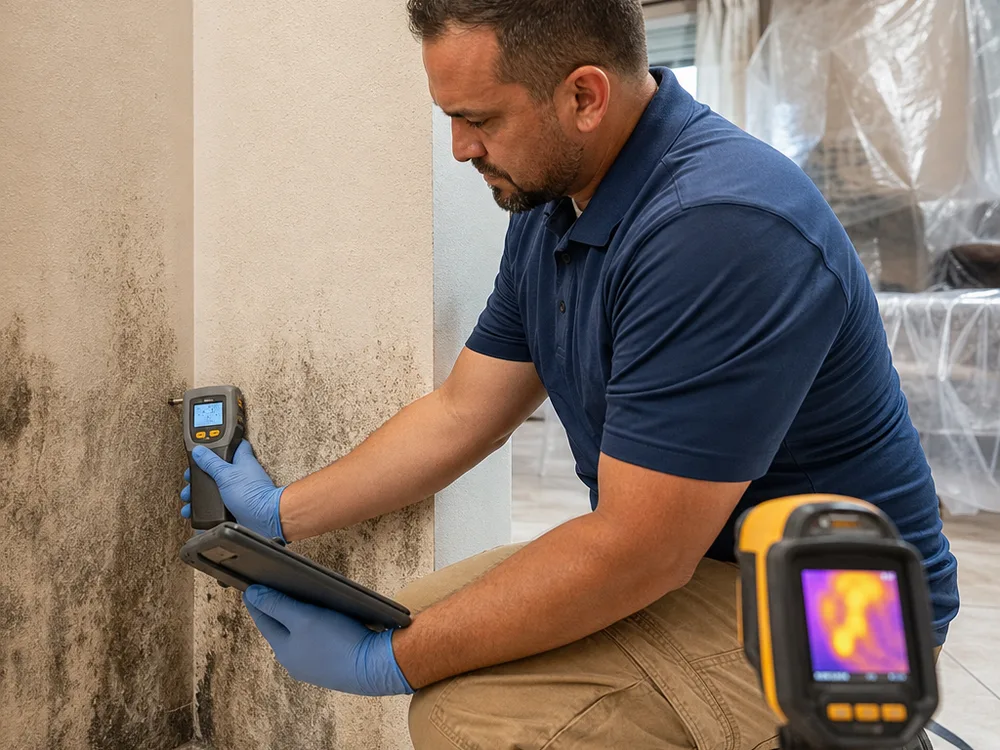
We note the suspected moisture source, affected materials such as drywall, wood trim, and insulation, and whether the pattern suggests an ongoing leak, past event, or humidity problem.
Readings and observations are recorded so repairs can be planned. When the moisture source is corrected, the same areas can be re-checked for dry-back.
You will know what areas were accessible and inspected, what was not visible without opening finishes, and what additional investigation would require limited demolition.
Photos support the written notes so you can share the report with a plumber, HVAC contractor, roofer, or buyer's agent without translating what was seen.
We outline practical next steps: fix the moisture source, decide whether containment is needed, and identify materials that typically must be removed versus cleaned.
A methodical visit connects your initial concern to documented moisture conditions and practical next steps.
We start with what you have noticed—odors, symptoms, or staining—along with recent leaks, flooding, and impacted rooms. For buyers, we align the inspection with the inspection period and due-diligence concerns.
We inspect likely problem areas and look for water staining, bubbling paint, swollen baseboards, microbial growth, and condensation patterns around windows and HVAC components.
Moisture meters help locate wet materials that may not look wet yet. When conditions call for it, thermal imaging helps identify temperature differentials consistent with moisture intrusion or missing insulation.
If sampling is appropriate, we collect surface or air samples based on the question being asked. Each sample point is documented so results can be tied to a specific area and condition.
You receive a written report summarizing findings, photos, and recommendations. If plumbing, HVAC, or roofing specialists are needed, the report makes it easier to obtain comparable repair bids.
A professional mold inspection in Tucson typically ranges from about $250 to $650 for most homes, depending on home size, the number of areas of concern, and whether sampling is needed. A focused inspection for one suspected area often lands at the lower end, while larger homes, multi-room concerns, or inspections that include multiple air or surface samples trend higher.
Pricing changes with access, including tight attics or cluttered rooms, time on site, and the number of samples and lab fees. The exact cost is confirmed after we understand the property and scope during scheduling and the on-site assessment.
Tucson is dry most of the year, but mold still happens when water gets trapped where it cannot dry quickly. We adjust the inspection based on how homes in different parts of town are built and used.
Oro Valley and the Foothills: Larger homes often have multiple HVAC zones and more roof penetrations, creating more places for condensate issues or intermittent water entry to appear as ceiling staining.
Sam Hughes and Blenman-Elm: Additions and remodels can create transitions between older and newer materials. We look closely at patchwork repairs, past staining, and hidden pathways for plumbing or window-flashing leaks.
Starr Pass and similar hillside areas: Drainage and roof-runoff handling matter. Heavy storms can drive water toward window and door openings or wall-to-roof intersections before paint or baseboards begin to change.
Across Tucson: Condensation management, clogged AC drain lines, and negative pressure drawing humid air into cavities can create conditions for growth without a dramatic flood. A good inspection connects the visible symptom to the moisture behavior behind it.
“We had a musty smell that came and went. The inspection found elevated moisture at the baseboard behind our washer and explained what to fix first. The report made it easy to get the plumbing repair handled and plan the next steps.”
“As a buyer, I needed something more detailed than a quick look. The inspector walked me through the moisture readings, explained where sampling did and did not make sense, and the report was clear enough to share during negotiations.”
Straight answers about when to inspect, how sampling works, appointment timing, and what your report provides.
Hire an inspection when the spot keeps coming back, you suspect a hidden leak, the affected area is larger than a small patch, or you are buying or selling and need documentation. In Tucson, recurring growth often points to moisture from plumbing, window leaks, or AC condensation, and cleaning the surface will not address what is happening inside a wall, under flooring, or in an HVAC closet.
No. Sampling is optional and should be tied to a specific decision. We recommend air or surface samples when results will change the plan, such as confirming suspected mold, documenting conditions for a transaction, or comparing a problem room to a control area. If the source and affected materials are obvious, moisture findings and visual documentation can be more useful than extra lab results.
Most inspections take about 60 to 120 minutes on site, depending on home size, access, and how many areas of concern you have. If we are checking multiple HVAC zones, attics, or several bathrooms and wet walls, plan on the longer end so we can document findings and moisture readings thoroughly.
Yes. The report identifies the likely affected materials and practical next steps, including what typically needs removal, such as water-damaged drywall or insulation, versus what may be cleaned if it is non-porous and structurally sound. The final scope depends on what is discovered once the moisture source is addressed and concealed areas are verified.
Often, yes, as long as access is available and the scope is clear when scheduling. For real estate timelines, we focus on moisture mapping in suspected areas such as bathrooms, kitchens, HVAC closets, and visible staining, then document findings in a format that is easy to share with your agent and contractors.
Make sure areas of concern are accessible: clear under sinks, move stored items away from stained walls, and provide access to HVAC closets and attic entries if safe. If you have photos from when a leak happened or notes on when odors are strongest, have those ready because the history often points directly to the moisture source.
Tell us what you have noticed and where. We will schedule a thorough assessment and provide written findings, moisture documentation, and next steps you can use to coordinate repairs with confidence.