
Inspection and scoping
A clear scope ties cost to what will be done: affected areas, materials involved, and what stays versus what is removed. If the job needs it, moisture mapping and documentation may be part of the estimate.
Serving Tucson, Arizona & surrounding areas
24/7 Emergency Response
One call instead of ten No web forms, no callback spam 24/7 Emergency Response
Get a fast, ballpark estimate based on square footage, where the growth is, and how much containment and drying are likely needed. Use it to plan your budget, then confirm with an on-site evaluation and a written scope.
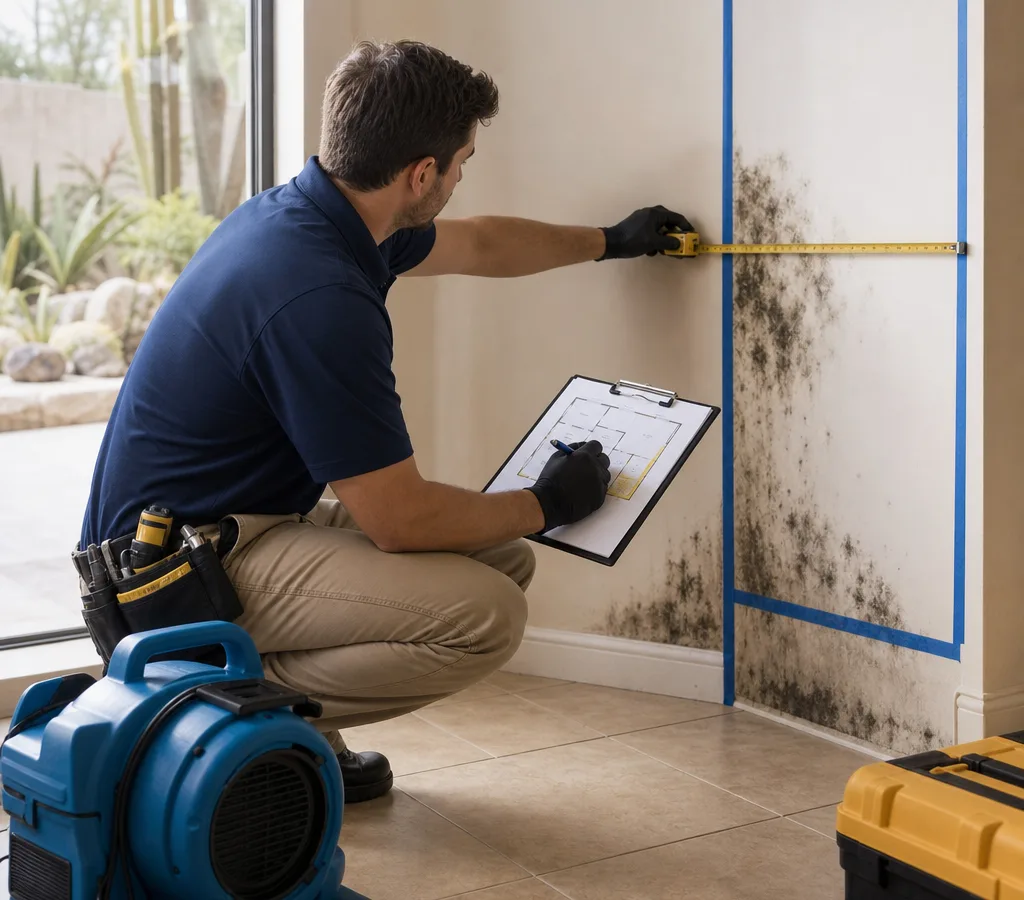
A Tucson mold removal cost calculator is best for one thing: turning a few clear inputs into a realistic budget range so you can decide your next step. To get the most accurate estimate, gather three basics before you start.
First, estimate the size of the affected area in square feet. A single patch behind a bathroom vanity is a different project than a continuous run along multiple walls. Second, note the material involved, such as drywall, wood framing, plaster, or attic insulation. Some materials can be cleaned; others usually need removal and replacement after contamination. Third, think about access and occupancy. A wide-open garage wall is simpler than a tight crawlspace, a finished closet, or a bedroom that needs careful dust control.
What a calculator cannot see is the hidden extent and the moisture source. In Tucson, mold jobs often follow a leak, an HVAC condensate issue, or water intrusion around windows. If the moisture source is still active, the cleanup scope changes because drying, controlled demolition, and rebuilding may be needed to keep the problem from returning. Treat any calculator result as a starting point for planning, then confirm with an in-person assessment and a written scope before any work begins.
Most mold cleanup projects in Tucson typically range from about $900 to $6,000+, depending on the size of the affected area, where it is located, and how much material must be removed. A small, contained spot in one room may land closer to the low end, while multi-room contamination, attic or crawlspace work, or jobs that require full containment and air filtration can run higher.
Final pricing changes with square footage, severity, the need for negative air/HEPA filtration, access such as tight closets, attics, and crawlspaces, and whether drying and removal of wet building materials are required. Your exact cost is confirmed after an on-site evaluation and a documented scope of work.
A good Tucson mold removal cost calculator usually weighs the same core variables our field estimates do. If you are trying to understand why your number landed where it did, these are the biggest drivers.
Area and containment level: Square footage matters, but containment matters more once work moves beyond a small, isolated spot. Full containment—poly sheeting, critical barriers, and zipper doors—plus negative air with HEPA filtration adds equipment time and labor, but it protects the rest of the home from cross-contamination.
Material type: Drywall and insulation are commonly removed because porous materials hold spores and cannot always be reliably cleaned. Solid wood framing may be cleaned with HEPA vacuuming and abrasion techniques when appropriate. The mix of porous versus non-porous surfaces shifts both time and disposal.
Location and access: Tucson homes often have work areas that complicate setup, such as tight water heater closets, attic sections with limited headroom, or interior rooms that require careful pathways to keep dust contained. Access affects labor hours and the containment layout.
Moisture and drying: If materials are wet or there is ongoing humidity in a closed space, drying equipment and monitoring can become part of the scope. Cleanup without correcting moisture is rarely a stable solution.
Documentation: Some situations require more documentation and coordination, especially when a property manager, tenant, or insurance adjuster needs photos, measurements, and a clear work plan.
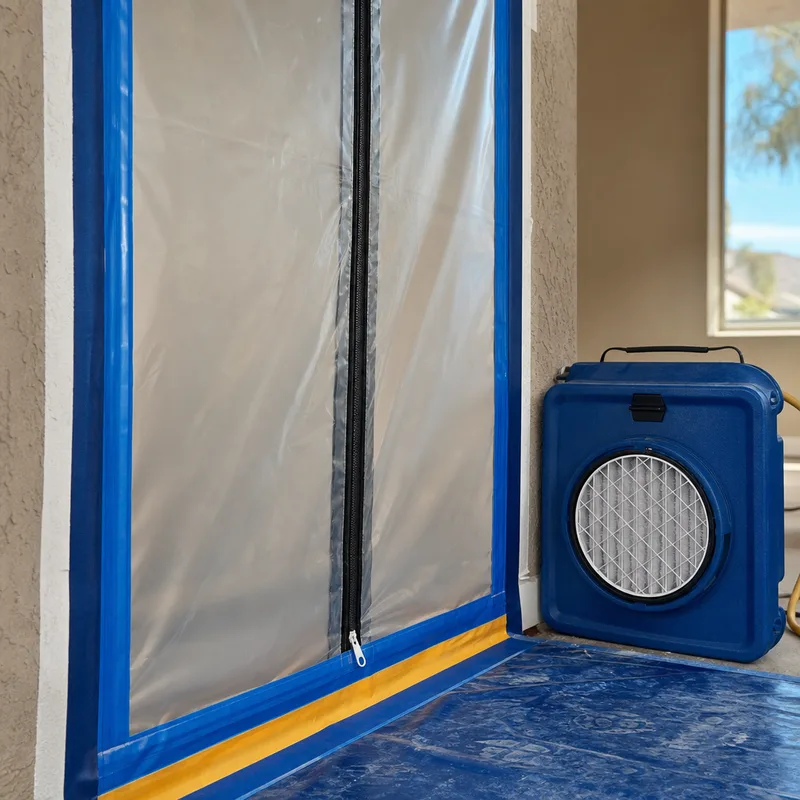
A clear scope ties cost to what will be done: affected areas, materials involved, and what stays versus what is removed. If the job needs it, moisture mapping and documentation may be part of the estimate.
Critical barriers, negative air, and HEPA filtration help prevent spread into clean rooms. The amount of setup usually tracks the size of the work zone and how close it is to living areas.
Cut-out and bagging of drywall, insulation, carpet pad, or other porous materials can be a major cost driver because it adds labor and disposal, and it often expands the work area.
HEPA vacuuming, damp wiping, and surface prep are the core. Depending on the situation, additional steps like controlled abrasion on framing may be used to reach a clean, stable surface.
If there is wet material or elevated moisture, drying equipment and follow-up checks may be needed. Drying time is often what changes a one-day job into a multi-day project.
Many estimates stop at remediation, but practical budgeting includes what it takes to put things back: drywall, texture, paint, baseboards, or insulation replacement. Your scope should state what is included.
A practical sequence turns your initial inputs into a documented scope based on the actual property conditions.
Provide the location of the suspected growth, an approximate square footage, and any known water event such as a leak, overflow, roof issue, or window intrusion. Photos help, especially of staining, damaged drywall, or visible growth.
A technician reviews the affected materials, access points, and any signs that the problem extends beyond what is visible. The goal is to define the real work area and what must be protected during removal.
You receive a clear scope that matches the conditions on-site: containment plan, removal versus cleaning, equipment needs, and anticipated timeline. This is where the calculator range becomes an actual price.
Work typically includes containment, controlled removal where needed, HEPA filtration, and detailed cleaning. The crew should leave the area ready for rebuild or, if applicable, for post-work verification.
Some cost drivers are universal, but a few Tucson realities tend to show up in estimates.
Monsoon-season water intrusion: When storms push water through roof penetrations, around windows, or into low spots, the project often includes more drying and more removal of water-damaged drywall than a simple surface-clean job. If materials stayed wet for more than a short period, the work zone can expand beyond what you first see.
Cooling load and condensate issues: Air conditioning runs hard in Tucson. If a condensate drain backs up or a pan overflows, contamination can appear near mechanical closets, ceilings, or wall cavities close to the air handler. Access and protection of finishes matter in these areas.
Adobe, plaster, and mixed construction: Parts of Tucson have older housing and remodels with mixed wall systems. When plaster, lath, or thick textures are involved, selective removal and rebuild planning can take more time than standard drywall.
Rentals and multi-family coordination: In student-heavy areas near the University of Arizona and larger apartment communities, scheduling access and documenting pre-existing damage can affect the overall timeline and administrative overhead.
If you are also comparing who to hire, the team at Tucson Mold Inspectors can walk you through what should be included in a proper mold remediation scope in Tucson so your estimate is apples-to-apples.
Straight answers about calculator inputs, site visits, moisture-source repairs, scheduling, and written scopes.
Square footage tracks labor and containment more reliably than room count because one room can have a small isolated patch or multiple affected walls. For pricing, what matters is the size of the work zone, the surfaces involved, and how much needs removal versus cleaning.
Choose the lowest visible severity only if the surrounding material is dry and there is no staining, softness, or musty odor that suggests hidden spread. In Tucson, small visible spots sometimes trace back to a slow leak or condensate issue, so an on-site evaluation is the safest way to confirm whether the affected area is larger behind drywall or inside a ceiling cavity.
Usually not, unless it is specifically written into the scope. A calculator estimate typically covers remediation steps like containment, removal, cleaning, and drying, while the plumbing or roof repair that stopped the water is often separate. When you request a quote, ask how moisture source correction is handled so the cleanup plan matches reality.
You can get a rough range with photos and details, but a firm price usually needs an on-site evaluation. Access constraints, hidden damage, and the containment plan are hard to confirm remotely, and those are the exact items that swing the final number.
Start timing depends on crew availability and whether the area is actively wet. If there is ongoing moisture, the first priority is stopping the source and stabilizing conditions so containment and drying are effective. During busy periods, such as after heavy monsoon storms, schedules can tighten across Tucson.
Bring the calculator inputs—estimated square footage, location, and visible severity—a short history of any leak or water event, and photos that show the area and nearby fixtures or vents. If the issue is in a rental or multi-family property, note who needs access approval so the work plan and timing are accurate.
Use the calculator to get your starting budget, then request an on-site evaluation with Tucson Mold Removal. You will get a written scope that spells out containment, removal versus cleaning, drying needs, and the timeline so you can make a confident decision.