Rapid stabilization
We prioritize stopping the water, extracting standing water, and setting initial drying so materials do not keep absorbing moisture.
Serving Tucson, Arizona & surrounding areas
24/7 Emergency Response
One call instead of ten No web forms, no callback spam 24/7 Emergency Response
When water gets into drywall, cabinets, or flooring, every hour matters. We respond fast, stop the source, dry the structure properly, and document the work so you can make clear decisions about repairs.
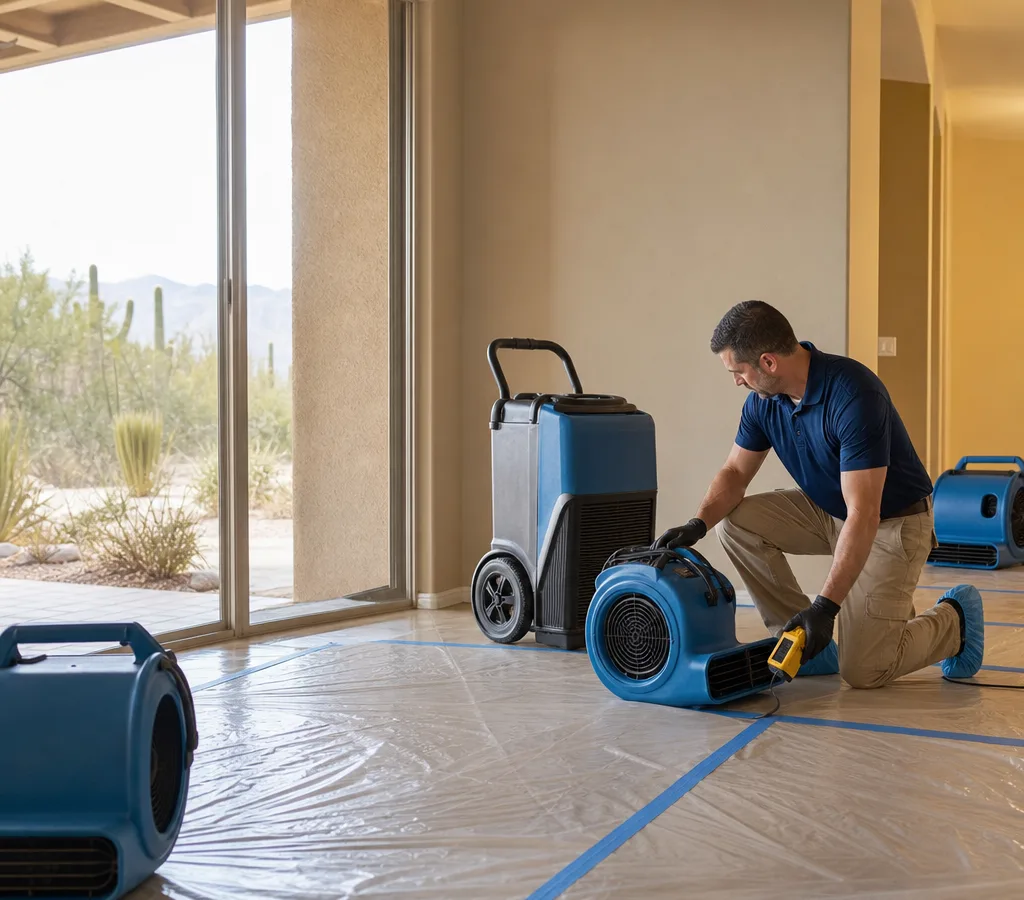
If you are searching for water damage restoration tucson az, you are usually dealing with one of three situations: a supply line leak, a drain/overflow backup, or storm water getting in through a roof, door, or window. Restoration is the work that happens between the water event and the rebuild. Done right, it prevents swelling, warping, rusting, and secondary microbial growth.
A complete restoration plan typically includes:
Tucson homes often use slab-on-grade foundations, so water can travel under flooring and show up far from the original leak. In condos and townhomes, water can move between units quickly. The first visit should focus on finding where the water went, not just where it appeared.
Water loss calls in Tucson tend to cluster around plumbing and monsoon season. You do not need to know the category or the technical terms before you reach out. You do need a team that can isolate the source and dry the structure based on measurements.
Frequent scenarios include:
If you also have concerns about indoor air quality after a water event, our team at Tucson Mold Inspectors can help you understand what is normal dampness versus conditions that call for further testing or remediation planning.
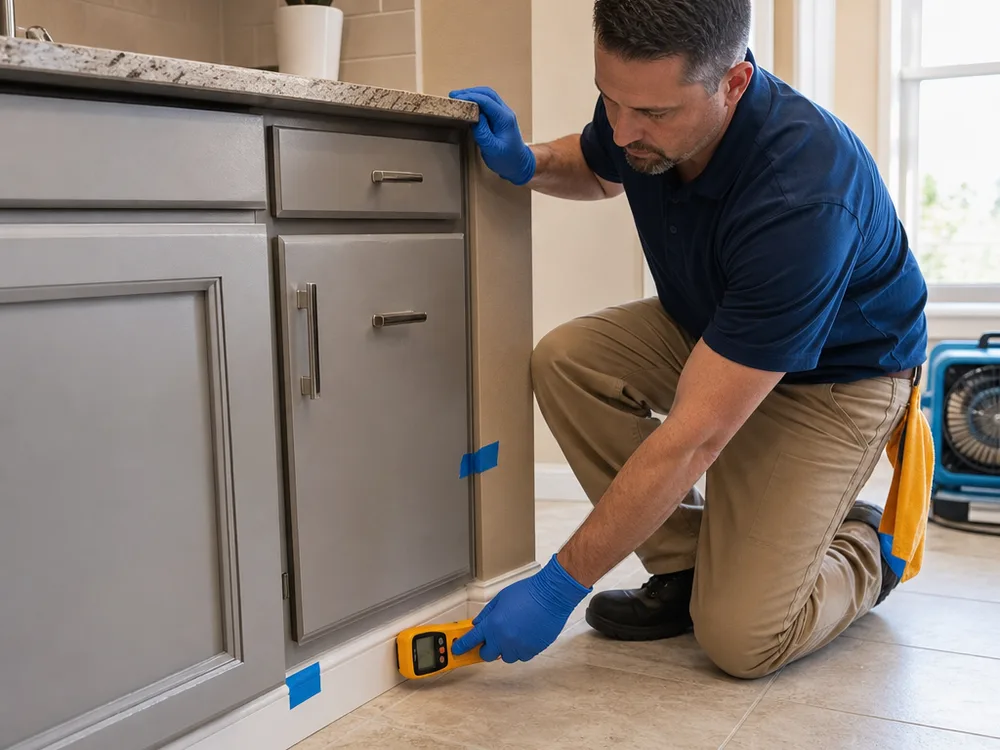
We prioritize stopping the water, extracting standing water, and setting initial drying so materials do not keep absorbing moisture.
Drying targets are based on moisture readings from unaffected comparison areas and re-checks, so the plan is driven by conditions in your home.
When drywall or flooring needs to come out, we explain what must be removed, what can stay, and what access cuts are required to dry cavities.
Containment where needed, careful debris handling, and protection for walk paths and nearby furnishings help keep disruption down.
Photo logs and moisture readings help support insurance conversations and keep repair decisions straightforward.
We plan for Tucson realities like slab construction, tile over concrete, and fast-moving storm moisture that can drive humidity up during monsoon weather.
A measured sequence moves your property from source control through verified drying and a clear repair plan.
We start by identifying active water sources and helping you isolate them—shutoff, appliance disconnection, or temporary containment. If the source is still active, drying equipment will not solve the problem.
We check visible damage and the areas water commonly travels: under flooring, behind baseboards, in adjacent closets, and along shared walls. Moisture meters and thermal imaging, when appropriate, help define the wet footprint.
We extract standing water, pull up wet pad when needed, and set air movers and dehumidifiers to create the right pressure and airflow pattern for the space.
We monitor moisture levels and adjust equipment placement as materials dry. In Tucson, outside humidity swings can affect drying strategy, especially during rainy periods.
If materials cannot be dried safely—commonly swollen MDF, saturated insulation, or delaminated flooring—we remove them in a controlled way, then clean and treat impacted structural surfaces as appropriate.
We confirm that affected materials are back to acceptable moisture levels, then provide a clear outline of what repairs are needed to return the space to pre-loss condition.
Most water damage restoration projects in Tucson typically range from about $1,500 to $7,500, depending on how far the water traveled and whether drywall, flooring, or cabinets must be removed. A small, contained leak with minimal removal may land closer to the low end, while multi-room losses that require significant drying time and demolition can exceed $10,000.
Final cost depends on the class/category of water, square footage affected, how quickly mitigation starts, access to wet cavities, equipment days needed, and the amount of material that must be removed and hauled away. The exact price is confirmed after an on-site inspection and moisture mapping.
“A supply line under our kitchen sink leaked while we were out. They found moisture under the flooring we never would have suspected, set up drying the same day, and kept us updated with readings so we knew when it was actually dry.”
“We had water come through the ceiling after a storm. The crew protected the floors, removed only what needed to come out, and left the place cleaner than I expected for this kind of work.”
If your property has wet drywall, buckled flooring, or a musty smell after a leak, get an inspection quickly. A written scope and documented moisture readings make the next steps much easier, whether you are paying out of pocket or filing a claim.
Call for a Free EstimateStraight answers about mitigation, drying, removal, insurance documentation, and rebuilding.
You should start mitigation as soon as you can, ideally the same day, because water wicks upward into drywall and spreads under flooring even after the visible puddle is gone. Early extraction and dehumidification reduces how much material has to be removed and lowers the risk of odor and microbial growth.
Sometimes, yes, but only if moisture readings show the cavity can dry effectively with the right airflow and dehumidification. If insulation is saturated, drywall has wicked water high, or water is trapped under non-breathable flooring, selective removal is often needed to dry the structure instead of sealing moisture in.
Stop the water source if it is safe, shut off power to affected areas if water is near outlets or fixtures, and move valuables and small furniture out of the wet zone. Avoid running the HVAC if you suspect water in duct chases or ceiling cavities, and do not cover wet floors with rugs or plastic because it traps moisture.
Yes. We provide documentation that typically helps claims move forward, including photos, moisture readings, and drying equipment logs. Coverage and deductibles are decided by your policy, but clear documentation makes it easier to understand what work was necessary and why.
Many residential drying projects take about 3 to 5 days, but the timeline depends on the materials involved, how long the water sat, and how much moisture is trapped in cavities or under flooring. We monitor progress with moisture readings and adjust equipment based on those measurements.
Restoration focuses on mitigation, drying, cleaning, and verifying the structure is dry; rebuilding is the carpentry and finish work that puts everything back. We will outline the repair scope you need after drying so you can plan the rebuild with clear information and fewer surprises once materials are opened up.
Tell us what happened and where the water was found. We will schedule an inspection, map moisture beyond the visible damage, and give you a clear scope for drying and restoration.