
A clear, covered source of moisture
Insurers want to tie mold to one event, not an ongoing condition. Photos of the leak point, a failed part, or a sudden overflow help connect the dots.
Serving Tucson, Arizona & surrounding areas
Mon–Fri 8am–6pm · Sat 9am–2pm
Arizona policies can cover mold in specific situations, but wording and documentation decide the claim. Get clear on what is typically covered, what gets excluded, and what to do first so you do not make the claim harder.

Sometimes. In Arizona, mold removal is most often covered only when the mold is the direct result of a covered peril that was sudden and accidental, and you act promptly to stop the water source and limit damage.
In Tucson, the most common claim paths start with an unexpected plumbing leak, a water heater failure, or storm-related water intrusion that leads to mold growth. The coverage decision usually turns on four things: what caused the moisture, whether the cause is covered, how long it went on before it was discovered, and what your policy says about mold, fungi, wet rot, and bacteria.
Start by assuming you will need to prove the source of moisture, the timing, and the steps you took to prevent additional damage. That proof often matters as much as the mold itself.
Coverage language varies, but insurers tend to think in terms of cause-and-effect.
More likely to be covered, depending on your policy:
Common reasons claims are denied or limited:
Two policy features matter considerably: a specific mold or fungi sublimit and a mold exclusion with narrow exceptions. Look for terms such as “fungi,” “microbes,” “wet or dry rot,” and “water damage” under exclusions, limits, and endorsements.
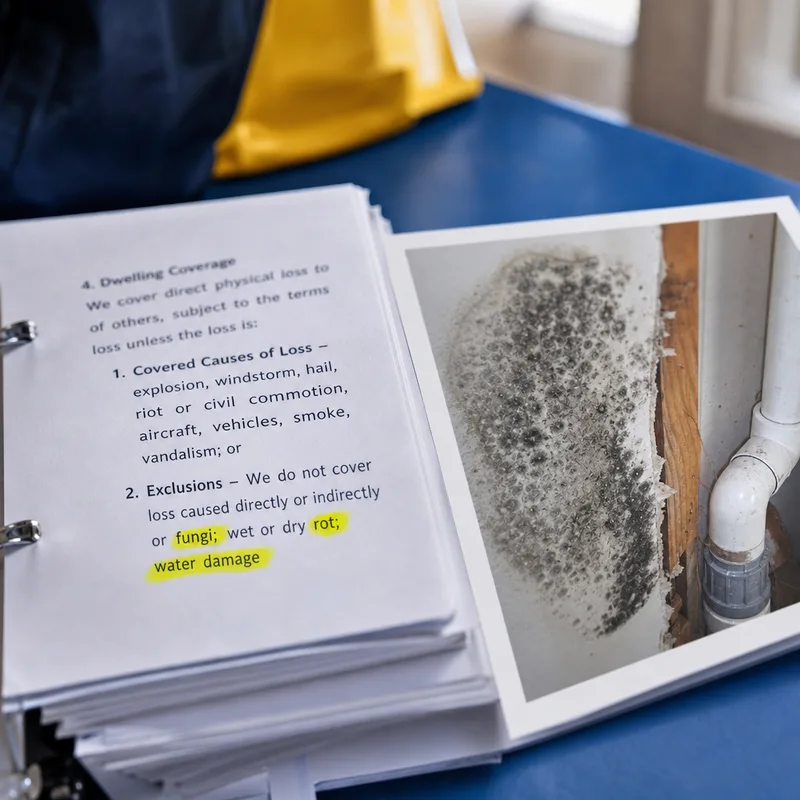
Insurers want to tie mold to one event, not an ongoing condition. Photos of the leak point, a failed part, or a sudden overflow help connect the dots.
Most policies require you to protect the property from further damage. Shutting off water, starting drying, and keeping records show you acted reasonably.
A short timeline is easier to validate than months of unknown moisture. Notes on when you first noticed staining, odors, or a leak can matter.
Take wide shots and close-ups before removing materials. Once drywall and baseboards are gone, it is harder to show what was affected.
Adjusters prefer documentation they can read quickly: what is affected, what gets removed, and what containment and cleaning steps are planned.
Protect the property, preserve the evidence, and build a clear record of the cause and response.
Shut off water if needed, and avoid spreading dust. If there is visible growth, limit foot traffic and avoid running fans that could blow particles into clean areas.
Photograph the leak source, wet materials, and any visible growth. Save receipts and write down dates, including when you discovered the issue and what you did that day.
If the event appears sudden and accidental, notify the carrier and ask what documentation they want. Keep notes of who you spoke with and what they requested.
A qualified remediation scope explains what is contaminated, what will be removed, how containment is built, and how cleaning will be verified. That scope can reduce back-and-forth with the adjuster.
Mold remediation is only part of the claim story. Insurers often focus on whether the water source was repaired and whether drying occurred quickly enough to prevent additional damage.
Tucson is dry for much of the year, but mold still shows up when water gets trapped inside building cavities. Homes with slab foundations can hide supply-line or drain leaks under flooring, and the problem may not become visible until odors, buckling, or staining appears. When moisture is concealed, insurers often ask for stronger proof of when the leak started and why it was not visible sooner.
During monsoon season, wind-driven rain can enter around windows, stucco penetrations, and roof-to-wall transitions. If mold follows storm intrusion, carriers usually look for storm timing, interior water-staining patterns, and evidence of prompt drying.
HVAC condensate and drain-line problems are another common local issue. A clogged condensate line can release water in a closet or attic area that is not checked often. Document the air-handler area and any overflow safety-switch activity.
If you need help deciding whether what you are seeing is mold, moisture staining, or something else, start with the team at Tucson Mold Inspectors. The right documentation early can make the insurance conversation simpler.
“Our adjuster kept asking for a clear scope. Once we had photos, moisture readings, and a written plan for containment and removal, the conversations got a lot more straightforward.”
“We thought insurance would automatically pay for everything once mold was found. Learning the difference between the leak repair, the drying, and what the policy covered saved us time and arguments.”
Straight answers about coverage, documentation, testing, hidden leaks, and protecting your claim.
Homeowners insurance in Arizona may cover mold removal when the mold is caused by a covered, sudden, accidental water loss and you took quick steps to prevent further damage. Many policies also have mold-specific limits or exclusions, so the exact wording of your policy matters as much as the cause.
Usually not, because insurers often classify slow leaks as long-term seepage or maintenance. If you can show the leak was recent and sudden, coverage is more likely, but hidden plumbing leaks are commonly scrutinized for timeline and prior signs.
Not automatically. Some carriers treat mold remediation as part of the covered water damage work, while others apply a separate mold or fungi sublimit, even if the original water loss is covered.
Start with dated photos of the source of moisture, the wet or damaged materials, and any visible growth, plus a brief written timeline of discovery and actions taken. In Tucson claims, documentation is especially helpful when moisture is concealed in slab-adjacent flooring, behind cabinets, or near HVAC condensate areas.
Avoid disturbing visible mold if you can, because wiping or sanding can spread particles and remove evidence of what was affected. It is reasonable to stop the water source and take steps to prevent further damage, but document first and ask your carrier what emergency mitigation they want performed.
Sometimes, but often only when testing is necessary to support a covered loss or verify the extent of covered damage. Many claims focus more on moisture-source documentation and a remediation scope than on air sampling.
Renters insurance typically focuses on personal property and liability, not building remediation, and mold is often excluded unless tied to a covered sudden water loss. If the mold is related to the building, the landlord's policy may be involved, but liability depends on the cause and the lease.
Ask what evidence they need to determine duration and cause, and provide what you have: photos, plumber notes, repair invoices, and a written timeline. A professional moisture assessment and a clear scope can help clarify whether damage patterns point to a sudden loss versus long-term seepage.
If you are dealing with suspected mold and you are unsure whether insurance applies, Tucson Mold Removal can document conditions, outline a safe remediation approach, and help you organize the information insurers typically request so you can make decisions with fewer surprises.