
Around windows and sliders
Look for swelling trim, bubbling paint, or darkened corners after wind-driven rain. Check the sill and the drywall directly below for soft spots.
Serving Tucson, Arizona & surrounding areas
Mon–Fri 8am–6pm · Sat 9am–2pm
Monsoon rain and high humidity can turn a small leak into mold fast. Use this guide to spot early growth, dry out the right way, and know when it is time for professional help in Tucson.
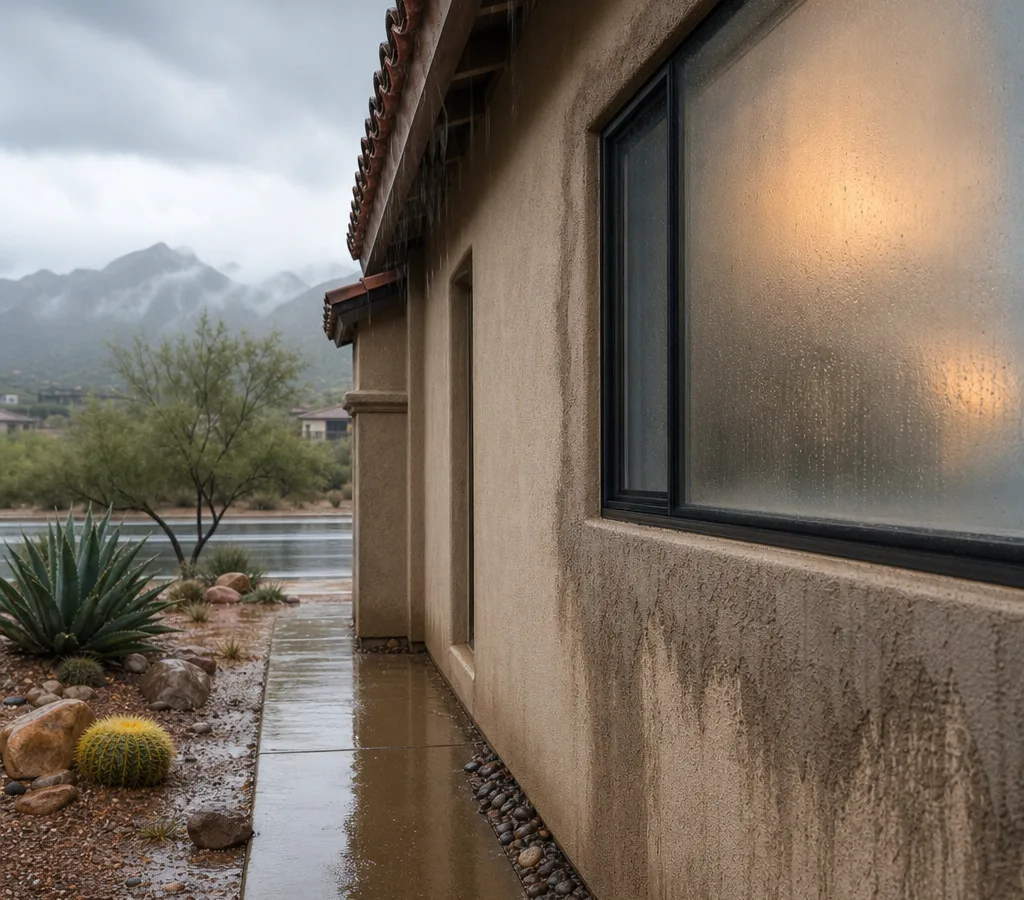
This Tucson monsoon mold guide focuses on one reality: mold is a moisture problem first. During monsoon season, short bursts of heavy rain and elevated humidity can overwhelm drainage, push water into small openings, and slow down drying. Homes that feel fine most of the year can hold dampness in wall cavities, under flooring, or inside HVAC closets after a storm.
In Tucson, mold concerns often start with ordinary storm issues: a roof or flashing drip that only shows up in wind-driven rain, water backing up around a door threshold, or a clogged condensate line that starts overflowing when humidity climbs. Even when you never see standing water, materials like drywall paper, baseboards, carpet pad, and dust in supply registers can support growth once they stay damp.
The key takeaway: if something got wet, the first 24 to 48 hours matter. Drying and containment decisions in that window often determine whether you are dealing with a quick cleanup or a larger remediation.
Look for swelling trim, bubbling paint, or darkened corners after wind-driven rain. Check the sill and the drywall directly below for soft spots.
High indoor humidity plus a small supply line seep can feed mold behind vanities or along baseboards. Sniff for a persistent musty odor with the fan off.
Closed doors limit airflow, so damp drywall can stay wet longer. Pull items away from the wall and look for speckling or fuzzy growth on shoes, boxes, and the wall surface.
Condensation and dust combine quickly. If you see staining at a return, or the filter area smells earthy, investigate before you run the system nonstop.
Water can wick under flooring without obvious puddles. Lift corners of rugs and check tack strips, carpet pad, and the first inch of baseboard.
Storm water can enter at thresholds and collect at the edge of interior flooring. Check the bottom of the door jambs and the adjacent wall.
If you had a leak, wet carpet, or damp drywall after a storm, drying is the priority. Start by stopping the source—whether it is a roof drip, plumbing line, or AC condensate overflow—and then remove what is trapping moisture.
Practical steps most homeowners can do safely
Avoid common mistakes
If you cannot get materials dry fast, or you suspect moisture moved into a wall or under flooring, an inspection can confirm whether you are still in simple dry-out territory or if removal is warranted. Tucson Mold Removal can help you decide on a safe plan and explain what to expect when working with Tucson mold inspectors.
A controlled sequence connects the original water source to safe removal and verified dry conditions.
A musty smell does not tell you where the water is. A basic plan starts with locating the source and mapping what got wet—at the surface, behind the wall, under flooring, or inside a ceiling.
Non-porous materials such as tile, some plastics, and metal can often be cleaned if the structure behind them is dry. Porous building materials that stayed wet long enough may need controlled removal to prevent ongoing growth.
If growth is visible, widespread, or in a high-traffic area, containment helps keep disturbed material from spreading to the rest of the home. HEPA filtration is commonly used to reduce airborne particulates during work.
The goal is to physically remove contaminated porous material and clean remaining framing or sheathing when appropriate. Hidden damp insulation, wet backing, and affected contents are also addressed.
If you rebuild over damp materials, mold can return. Dry verification often includes moisture readings and a final walkthrough so the fix is based on conditions, not guesswork.
Monsoon-related mold removal in Tucson typically ranges from about $750 to $3,500 for smaller, contained areas, while larger or multi-room projects—especially those involving drywall removal, insulation, and containment—often land around $3,500 to $10,000+.
Your final price depends on how far moisture traveled, what materials are affected, whether containment and HEPA filtration are needed, access to the area, and how much demolition and rebuild coordination is required. The exact scope and cost are confirmed after an on-site assessment of moisture and affected materials.
“After a monsoon storm we had a musty smell but no obvious leak. The inspection found damp drywall behind a closet wall. The plan was clear, the work area was contained, and the smell was gone once everything dried out properly.”
“We thought it was just a little spotting near a window. Once the trim came off, the drywall edge was soft. They explained what could be cleaned, what had to be removed, and how to keep the rest of the house protected during the work.”
Straight answers about post-storm drying, hidden moisture, safe cleanup, and professional removal.
Mold can begin growing within 24 to 48 hours when porous materials stay damp, especially drywall paper, carpet pad, and dust in enclosed cavities. In Tucson monsoon conditions, the bigger risk is not the rain itself but the slower drying that happens when indoor humidity stays elevated and airflow is limited in closets, behind vanities, and under flooring.
No, a musty odor means there is likely moisture and organic material somewhere, but the source could be wet building materials, damp dust in an HVAC return, or a small hidden leak. If the smell persists after you dry and ventilate for a day, an inspection is the quickest way to determine whether you have active growth or a moisture problem that has not been addressed.
Bleach is not a reliable fix on porous materials like drywall because it does not penetrate well and can leave moisture behind. Small surface spotting on non-porous materials may be cleanable, but visible growth on drywall, swollen baseboards, or recurring staining usually means there is moisture in or behind the material that needs a proper dry-out plan and, sometimes, removal.
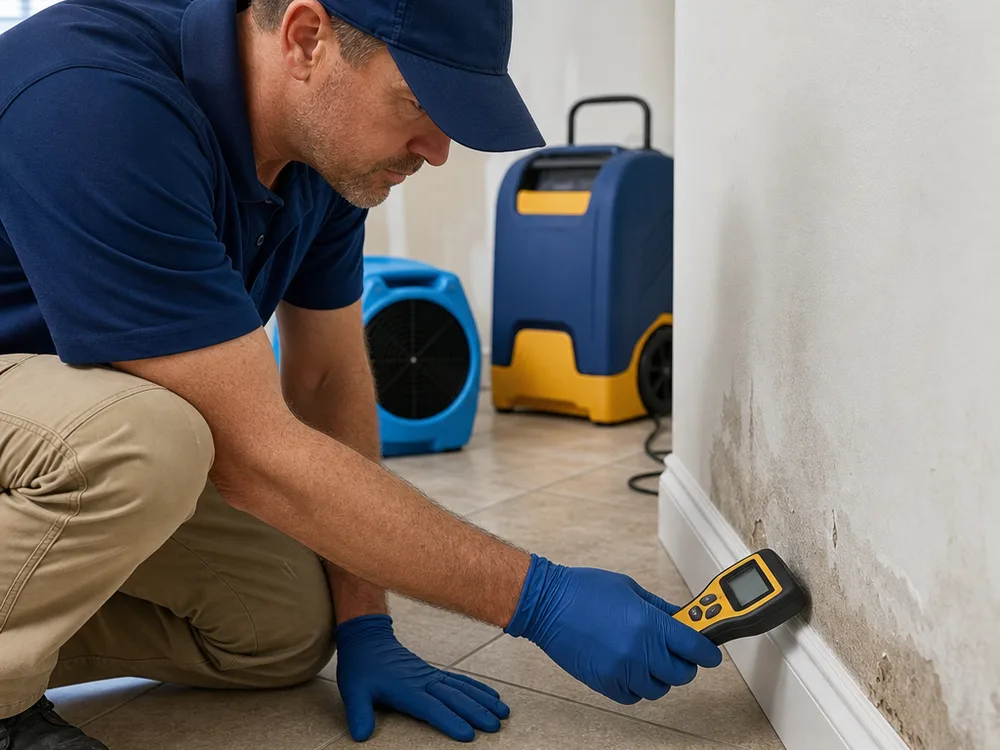
Warning signs include soft drywall, bubbling paint, staining that returns, a persistent odor in one room, or higher humidity in a closet or along an exterior wall. A moisture meter and targeted inspection can confirm whether the wall cavity stayed wet, which is the common reason mold shows up days after the rain stops.
Often, yes, if the affected area is properly contained and the work is limited to a specific room or section of the home. If growth is widespread, in a bedroom, or if someone in the home is sensitive to airborne irritants, it may be more comfortable to avoid the work area until drying and cleanup are complete.
Stop the water source, remove standing water if present, and begin drying with airflow and dehumidification. Pull wet items off the floor and away from walls so materials can dry from all sides. If you cannot get the area drying quickly, or if water reached drywall, insulation, or flooring edges, bring in a professional before you close anything up.
Get a clear, local plan for what to dry, what to remove, and what to monitor after monsoon storms. Tucson Mold Removal can assess the affected areas and outline next steps before the problem spreads.